


You already know what a crypto payment API is. The question at the evaluation stage is narrower: which provider's architecture fits your stack, compliance posture, and settlement requirements — and which one quietly breaks at volume.
[[aa-cta-blue]]
Merchant Wallet
Borderless Payments. No Chargebacks. No Middlemen.
Crypto transactions are irreversible and global by design. Accept payments from any market, settle instantly to your wallet, and cut chargeback overhead for good.
[[/a]]
This is a decision-support resource for CTOs and payment engineers comparing integration options. We'll cover API architecture, evaluation criteria, B2BINPAY's technical depth, compliance controls, settlement mechanics, and a side-by-side provider comparison. No definitions, no vendor fluff — just the variables you need to rank before an engineering team writes its first line of integration code.
Key Takeaways
- A crypto payment API's backend architecture (direct-to-blockchain, liquidity-pool, or market-making) determines settlement speed and merchant cost structure before any configuration decisions are made.
- Webhook handlers must process events idempotently. The same payment state change can be delivered more than once, and non-idempotent code will duplicate fulfillment at scale.
- KYT screening and AML controls should be evaluated as API-level features, not bolt-ons. Forex brokers, iGaming operators, and cross-border merchants cannot treat compliance as optional.
- Typical crypto processing fees run between 0.5% and 2%. Fee-model transparency separates providers that charge a flat rate from those hiding margin inside spreads.
- B2BINPAY's off-chain transaction layer and unique-deposit-address model reduce latency and reconciliation overhead for high-volume flows.
What Makes a Crypto API Enterprise-Ready
Enterprise-ready is an operational term, not a marketing one. It means deterministic settlement, production-grade compliance tooling, webhook reliability measured in SLAs, and multi-chain coverage that doesn't require provider-side releases for new tokens.
Implementation-focused providers succeed because they answer developer-level questions — rate limits, retry logic, and signature verification — not just positioning claims. If an API can’t answer those, it’s not enterprise-ready.
How Payment Requests Flow from Checkout to Settlement
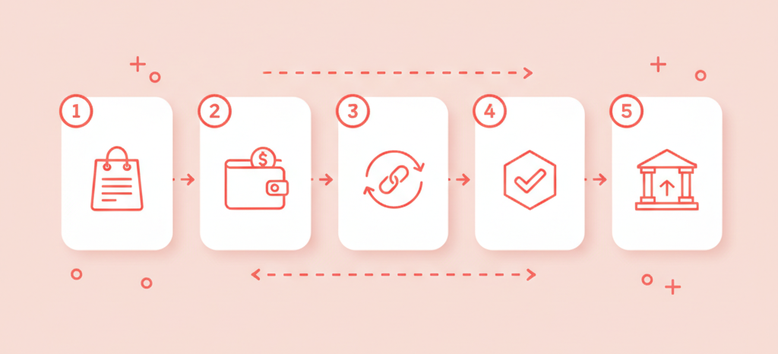
A full payment lifecycle has five stages:
- Order creation — merchant backend calls invoice endpoint
- Unique deposit address generation — single-use address tied to transaction
- Blockchain broadcast — customer submits transaction
- Confirmation — network confirms transaction
- Merchant settlement — funds arrive, conversion applies, webhook fires
Fulfillment logic must depend on confirmed, not pending, states.
Why API Architecture Determines Settlement Outcomes
Direct-to-blockchain APIs expose transaction hashes and confirmations. Liquidity-pool models abstract the chain. Market-making models guarantee rates via spreads.
For regulated operators, direct blockchain transparency is usually required. Auditors and treasury teams need independently verifiable transaction data.
Evaluating Crypto Payment APIs: Key Criteria
Blockchain and Token Coverage
Coverage includes supported chains, token standards (ERC-20, TRC-20, etc.), and whether new chains require API changes.
B2BINPAY supports 350+ currencies across 20+ blockchains, enabling broader customer acceptance and treasury flexibility.
Compliance Tooling: KYT, AML, and Travel Rule
KYT screens transactions at the blockchain level before settlement. This is critical for regulated sectors.
Most providers treat compliance as an add-on. B2BINPAY integrates KYT directly into the transaction flow.
Fee Structure and Hidden Costs
Hidden costs include:
- Rolling reserves
- Conversion spreads
- Network fee markups
Industry fees range 0.5–2%. B2BINPAY charges 0.25–0.40% flat with no rolling reserve.
B2BINPAY API: Technical Deep Dive
REST Architecture, Endpoints, and Authentication
B2BINPAY uses REST over HTTPS with API key authentication. Core endpoints include:
- Payment creation
- Balance queries
- Swaps
- Webhook configuration
Unique deposit addresses per transaction eliminate reconciliation ambiguity.
Webhook Callbacks and Idempotent State Handling
Webhook events include:
- payment-created
- payment-pending
- payment-confirmed
- payment-settled
Idempotency is critical. Duplicate events must not trigger duplicate fulfillment.
API-Level Compliance and Security
Compliance operates at the API level:
- KYT screening
- AML monitoring
- Sanctions checks
- Secure custody
B2BINPAY embeds these controls directly into transaction processing.
[[aa-cta]]
Integrate Crypto Payment API
Get started with B2BINPAY's sandbox and production API with 0% rolling reserve and fast fiat settlement
[[/a]]
Settlement Mechanics and Fiat Off-Ramp
Settlement models include:
- Crypto-only
- Stablecoin routing
- Fiat conversion
Stablecoins now dominate settlement flows due to speed and price stability.
Auto-Conversion Configuration
Conversion can be:
- Immediate
- Threshold-based
- Scheduled
This eliminates volatility risk between payment and settlement.
0% Rolling Reserve and Fast Fiat Payout
Crypto removes chargeback risk, eliminating the need for rolling reserves.
B2BINPAY offers:
- 0% reserve
- <24-hour fiat payout via SEPA/SWIFT
Crypto Payment API Provider Comparison
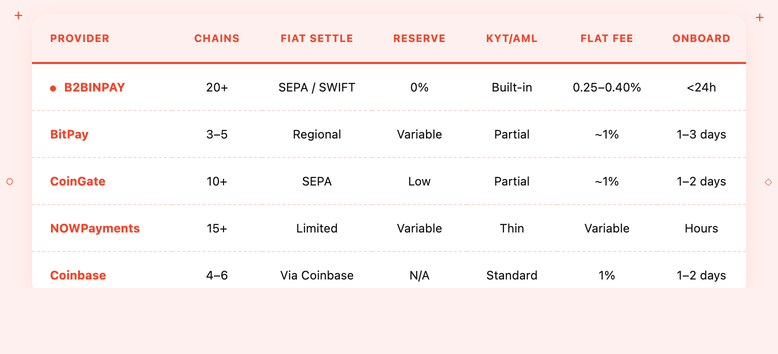
B2BINPAY
- 350+ currencies, 20+ chains
- Fiat settlement (SEPA/SWIFT)
- 0% reserve
- 0.25–0.40% fee
- KYT/AML built-in
- Sandbox + <24h onboarding
BitPay
- Limited assets
- ~1% fee
- Regional fiat settlement
- Variable reserves
CoinGate
- Moderate coverage
- ~1% fee
- SEPA payouts
- Limited API-level compliance
NOWPayments
- Wide asset list
- Variable fees
- Limited compliance tooling
Coinbase Commerce
- US-focused
- Limited chains
- Fiat via Coinbase
- 1% fee
Integration Path: From Sandbox to Production
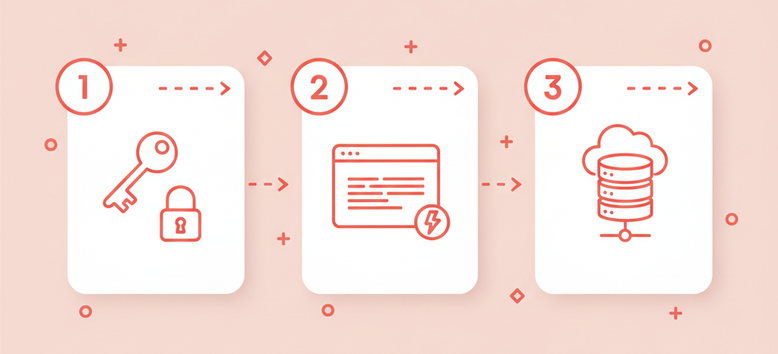
Step 1: Obtain API Credentials
Set up account, generate keys, configure webhooks.
Reference: payment gateway API guide
Step 2: Implement Payment Flow
Call invoice endpoint, store transaction reference, redirect user to hosted checkout.
Step 3: Handle Payment States
Use webhook-driven state machine.
Fulfillment triggers only on confirmed state.
For deeper integration patterns, see bitcoin payment API integration guide.
Start Integrating the API for Scale
An enterprise-ready crypto payment API combines:
- Compliance depth
- Reliable settlement
- Scalable architecture
B2BINPAY integrates payments, compliance, and treasury into one system.
[[aa-cta-blue]]
Ready to build?
B2BINPAY sandbox and production API with 0% rolling reserve and fast fiat settlement
[[/a]]
Frequently Asked Questions about Crypto Payment API
How do webhooks work in a crypto payment API?
Webhooks are server callbacks triggered by payment events. They must be idempotent to prevent duplicate fulfillment.
What compliance features are required?
KYT, AML monitoring, and sanctions screening applied programmatically to each transaction.
What does a crypto payment API cost?
Typically 0.5–2%. B2BINPAY charges 0.25–0.40% flat with no hidden fees.
Which APIs support fiat settlement?
Not all providers do. B2BINPAY supports auto-conversion to USD/EUR with sub-24h payout.
How do I integrate a crypto payment API?
Steps: get credentials → configure webhooks → test in sandbox → go live.
You have not enough Humanizer words left. Upgrade your Surfer plan.

.svg)