


How to Accept Cryptocurrency Payments as a Business: Complete Guide 2026

If you are still paying 3% on every transaction and waiting days for cross-border wires to clear, you are leaving money on the table. In 2026, the tools to bypass the banking bottleneck are already here. Learning how to accept crypto payments is the most direct way to slash your operational costs and open your business to a global economy that never sleeps. This isn't about buying into hype; it's about upgrading your financial rails to work as fast as your business does.
Understanding Cryptocurrency Payments
Think of this less like a tech upgrade and more like cutting out a useless middleman. Traditional payments are a game of "telephone», passing money from a customer's bank to a processor, then to a card network, and finally to you. Each step costs you money. Crypto cuts the line. When you set up how to accept bitcoin payments, you are building a direct bridge to your customer. They send value, and you receive it. No intermediaries, no frozen funds, and no asking a bank for permission to access your own revenue.
What is cryptocurrency and how does it work?
In a business context, cryptocurrency is simply digital cash that doesn't require a bank vault. It lives on a blockchain: a public, unchangeable record that proves ownership instantly. When a customer sends you funds, the network verifies the math, not your identity. This means the money moves just as easily from New York to London as it does across the street, without any central authority slowing it down.
How do crypto transactions differ from traditional payments?
The main difference is finality. A credit card swipe is essentially a "request" for money that can be revoked (chargebacks) weeks later if the customer complains. A crypto transaction is the transfer of the asset itself. Once it hits your wallet, it's yours. There are no "pending" windows, no reversals, and drastically lower fees because you aren't paying for the infrastructure of Visa or Mastercard. It is faster, cheaper, and gives you total control over your cash flow.
Why Businesses Should Accept Crypto Payments
In 2026, sticking solely to fiat currency is an operational limitation. Learning how to accept crypto payments as a business is about optimizing your margins and modernizing your financial rails. The rationale is simple: you want to stop losing revenue to processing fees and start seeing settlements that don't pause for banking holidays.
Growing adoption and global reach
The "crypto niche" has evolved into a massive global economy. With millions of active users around the world, ignoring digital assets means ignoring a demographic with high disposable income. When you accept crypto, you make your products instantly accessible to an international audience without the friction of currency conversion or exchange rates. A customer in Brazil can pay a vendor in London using stablecoins or Bitcoin without worrying about swift codes. For an online merchant, this allows you to be paid globally and settle instantly.

Faster settlements and lower fees
If you've ever waited three business days for a credit card settlement to hit your account, you know the pain of the traditional banking system. It is slow by design. Blockchain technology operates 24/7. There are no "banking hours."
When you accept crypto, the settlement is effectively instant. The moment the network confirms the block, the funds are yours. And then there are the costs. While Stripe or PayPal might take 2.9% + 30¢, crypto processing costs are often a fraction of that - usually around 1%. For a business with tight margins, switching to digital currencies isn't just tech innovation; it is an immediate 2% raise on your bottom line.
Brand positioning and innovation image
Let's be honest: putting a Bitcoin logo at your checkout is a marketing flex. It signals to the market that your brand is modern, tech-forward, and ready for the future. This matters because the demographic that holds crypto tends to be younger, wealthier, and more willing to spend. By offering their preferred payment method, you differentiate yourself from competitors who are still stuck in the Visa/Mastercard era. It's a low-cost way to pivot your brand image toward innovation.
Challenges and Risks to Consider
It's not all upside. If you go into this blind, you will get burned. You need to actively manage three specific risks.
1. Volatility: The price of Bitcoin can drop 5% in an hour. If you hold the asset, you lose revenue. The fix: Use a processor that auto-converts to fiat instantly.
2. Regulatory Uncertainty: The rules change fast. What is legal in 2024 might require new reporting in 2026. You need a partner who handles compliance for you.
3. Tax Complexity: The IRS and HMRC do not view crypto as cash; they view it as property. Every transaction is a taxable event. If your accounting software isn't set up to track cost basis, your tax season will be a nightmare.
How to Set Up Crypto Payments on Your Business Platform
You don't need a degree in cryptography to get this running. In 2026, the process of how to accept cryptocurrency is standardized. It's an integration task, not a science project. Follow this workflow to build a secure, compliant payment rail.
Step 1: Choose a Crypto Payment Gateway
Do not try to accept payments to a personal wallet. That is a security disaster waiting to happen. You need a dedicated business gateway. This service acts as your financial shield - it handles the technical complexity of the blockchain, manages security, and provides the interface your customers actually see .
Explore the cryptocurrency payment gateway with easy and secure setup
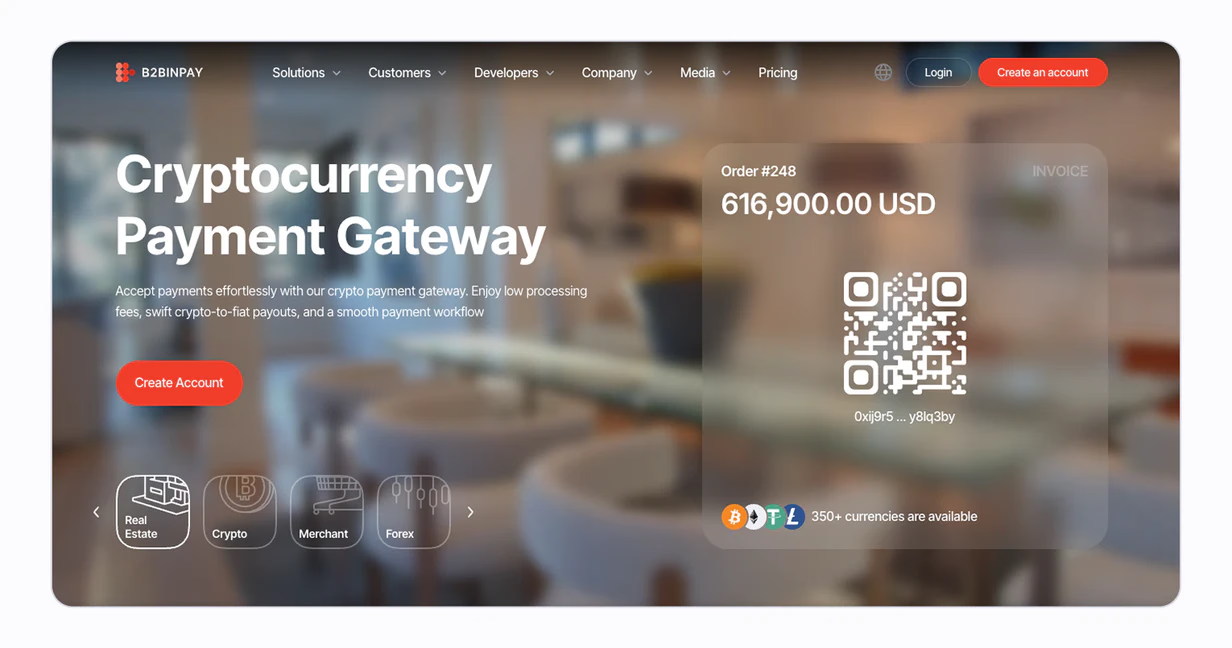
Ready to modernize your revenue stream? Check out the B2BINPAY solution. It offers a seamless integration that allows you to start accepting Bitcoin, stablecoins, and altcoins in minutes
Step 2: Create a Crypto Wallet
Your gateway will usually provide this, but you need to understand what it is. This is your digital vault. It is where the funds land before they are converted or withdrawn. When figuring out how to receive crypto payments safely, the golden rule is "role-based access." Only the business owner or CFO should have the authority to withdraw funds from this wallet; everyone else should have "view-only" access.
Step 3: Construct Your Platform by Integrating the Payment Gateway
This is the "plug-and-play" phase. If you use Shopify, Magento, or WooCommerce, you just download the plugin and link your API key. If you have a custom site, hand the API documentation to your developer. The goal is a seamless checkout: the customer selects crypto, scans a code, and your system gets a "Success" ping.
Step 4: Configure Tax Implications
Do this before you take your first payment. Connect your gateway to your accounting software (like QuickBooks or Xero). You need to ensure that every single sale records the fiat value of the crypto at the exact moment of the transaction. This audit trail is your defense during tax season.
Step 5: Test and Launch
Never go live without a dress rehearsal. Use the gateway's "sandbox" mode to run a fake transaction. Did the invoice generate correctly? Did the receipt email go out? Did the funds show up in the test dashboard? Only when the plumbing is proven do you open the tap.
Step 6: Educate Your Customers
You built it; now tell them. Put a "We Accept Crypto" badge in your footer. Send an email blast. Write a simple help doc explaining how to pay. A lot of customers hold crypto but don't know they can spend it with you. Show them the door is open.
Selecting the Right Payment Processor
This is the most critical infrastructure decision you will make. Don't just look at the 1% fee. Look at the settlement speed. Do they hold your money for a week, or do you get it tomorrow? Look at the support. If a transaction gets stuck on the blockchain at 3 AM, is there a human to talk to? Your processor is your partner; choose one that operates at the speed of your business.
How a Crypto Payment Works
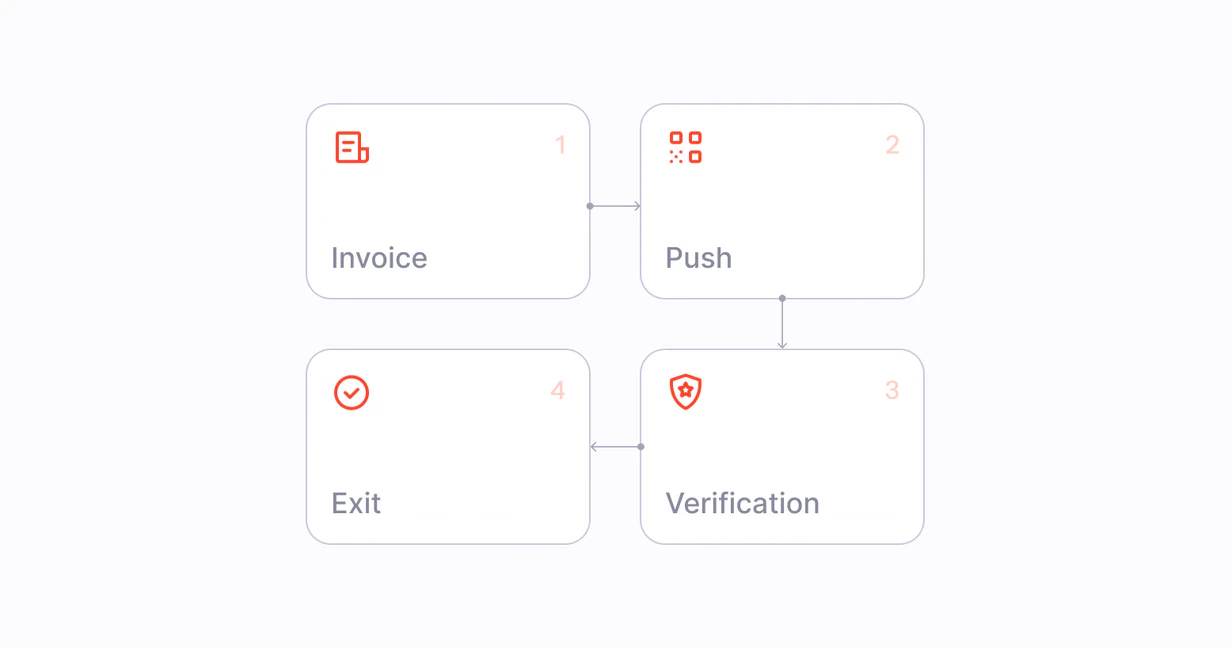
If you are asking how can my business accept cryptocurrency without hiring a specialized engineer, you need to understand the mechanics of the settlement. It is not magic; it is a digital handover of assets that happens in four specific stages.
The Invoice: The process starts when your customer selects crypto at checkout. Your gateway doesn't just show a wallet address; it generates a dynamic invoice. Crucially, it locks the exchange rate for a set window (usually 15 minutes). This is vital. It ensures that if the market dips while they are paying, you don't end up short.
The Push: Unlike a credit card where you "pull" funds, the customer "pushes" them. They scan the QR code and authorize the transfer from their wallet. The transaction is broadcast immediately to the blockchain network.
The Verification: This is where the bank is replaced by code. The network (miners or validators) confirms the legitimacy of the transfer. Your merchant dashboard tracks this in real-time. For Bitcoin, you might wait for 2-3 confirmations; for high-speed chains, it's instant.
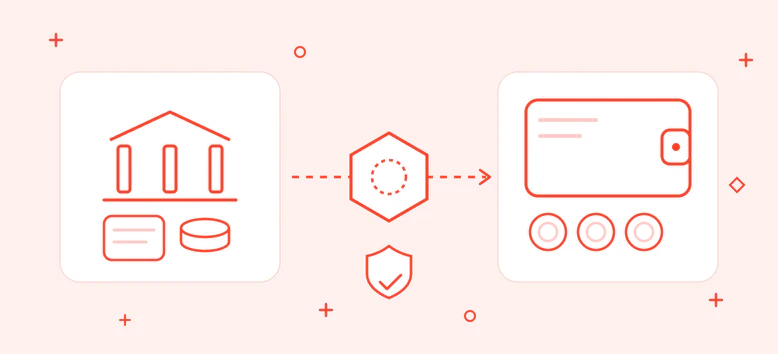
The Exit: Once confirmed, the funds are yours. If you have auto-conversion enabled, the system instantly executes a trade to convert that crypto into fiat (USD/EUR). The final result is a cash balance in your accounts, completely shielded from risk.
Choosing the Right Crypto Payment Processor
This is an infrastructure decision. The wrong processor will cost you sales through failed transactions and hidden fees. You need a partner that operates like a financial institution, not a tech startup.
What features to look for
Ignore the flashy frontend. Look at the backend. You need robust resources for reconciliation. Can the system export data that matches your bank deposits to individual invoices? If not, your accounting team will revolt. Also, test their services. In a 24/7 market, if a payment gets stuck on a Sunday, you need a human engineer on the line, not a chatbot.
Supported coins and stablecoins
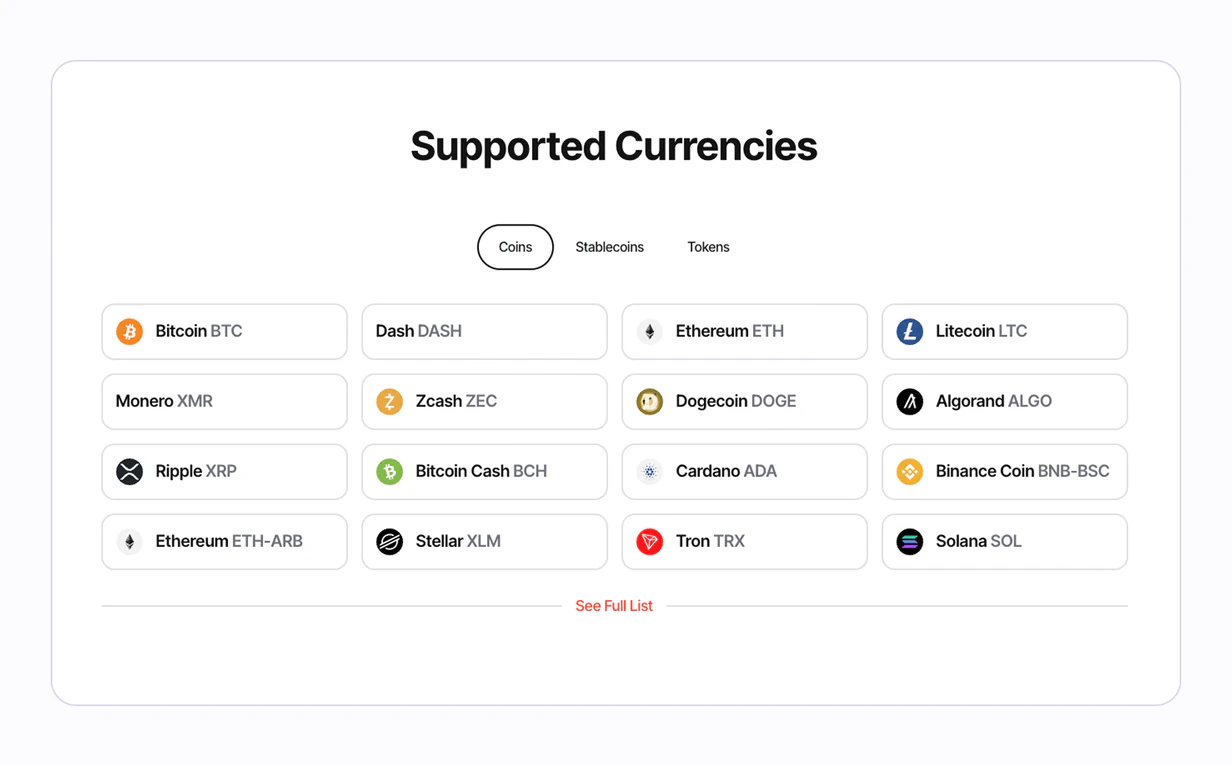
In 2026, volume is king. While supporting Bitcoin is a brand requirement, the actual revenue often comes from stablecoins. Your provider must support native USDT and USDC on modern, low-fee networks like Tron and Solana. If you force a customer to pay a $15 gas fee on Ethereum to buy a $50 item, they will abandon the cart. Broad support for these currencies is non-negotiable. > Check the liquidity: Ensure your gateway supports the digital assets your customers actually hold .
Security standards and compliance
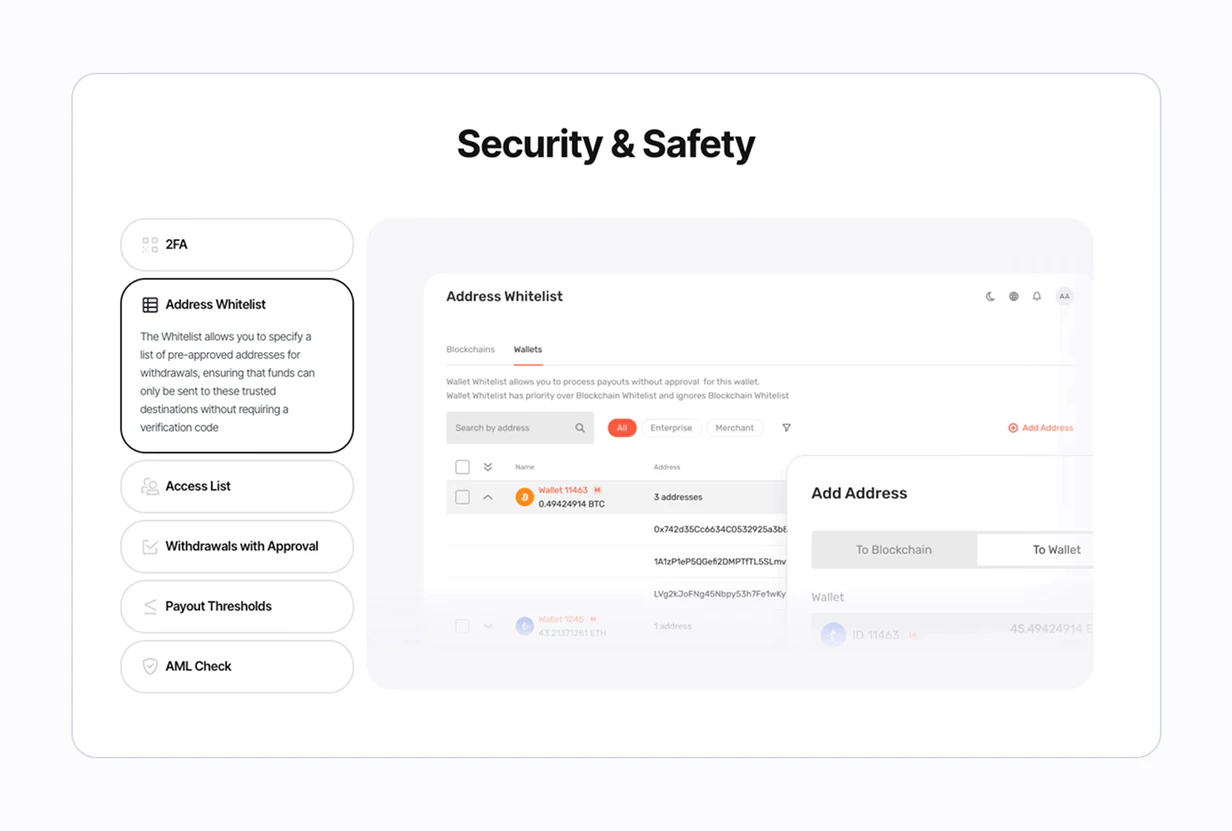
You are effectively hiring a custodial partner. You must verify their security architecture. Do they keep the majority of client funds in cold storage (offline), or are they exposed in hot wallets? On the legal side, they must be fully licensed and enforce strict money laundering aml protocols. If they are lax on compliance, your business funds are at risk of being frozen by regulators.
Integration options and fees
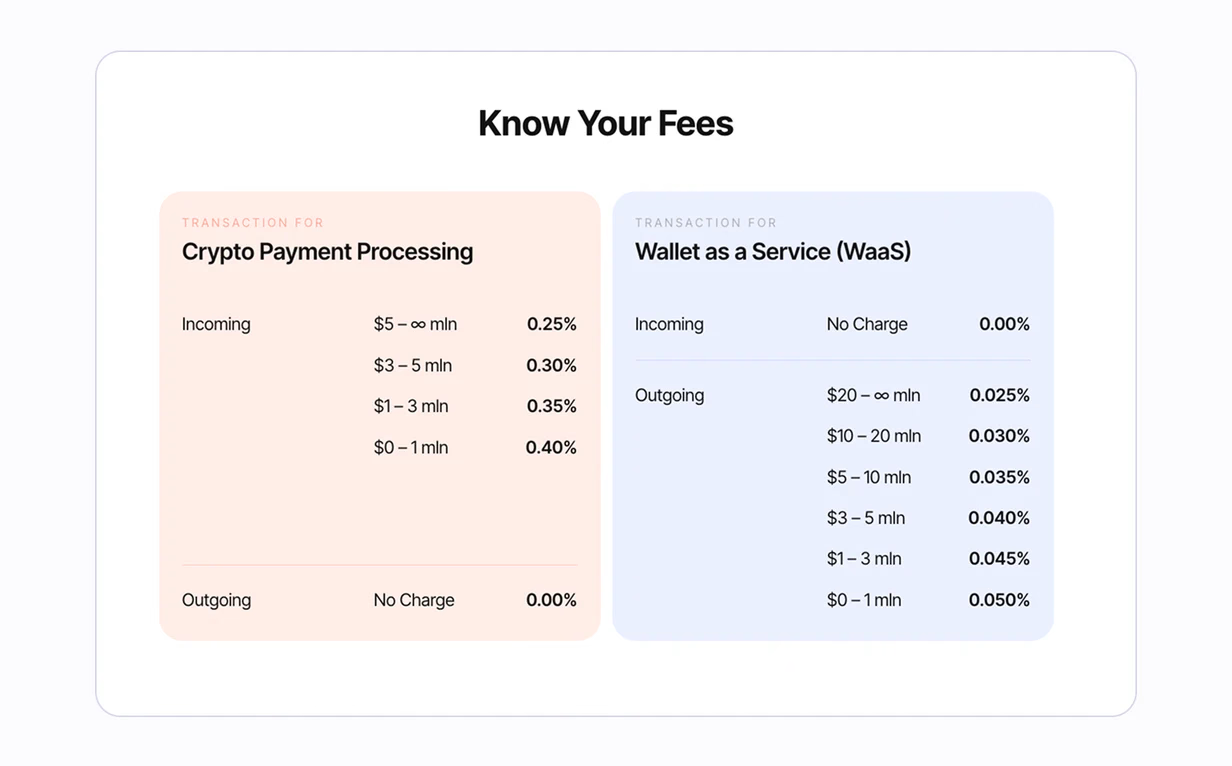
How does the code get onto your site? For a standard e-commerce platform, you want a verified plugin. For custom platforms, you need a clean, well-documented API. When it comes to processing costs, look closely. The industry standard is around 1%, but some providers hide revenue in the exchange spread. Demand to know exactly what rate is used for conversions. Transparency here is the only way to protect your margins.
The Best Ways to Handle Cryptocurrency Transactions
Accepting the payment is only the first step. How you manage those funds determines whether crypto is a growth engine or an accounting headache.
Auto-Conversion (The Treasury Shield): Unless you are a speculative investment firm, do not hold volatile assets. Configure your processor to automatically convert incoming Bitcoin or Ethereum into stablecoins or fiat immediately. This neutralizes price risk management.
Segregated Wallets: Never mix operational funds with long-term holdings. Use a "hot wallet" for daily processing, but sweep excess funds weekly into a secure "cold storage" vault.
Unified Reporting: Treat crypto like any other currency. Use tools that plug into Xero or QuickBooks to tag every transaction with its fiat value at the time of receipt. This ensures your books are audit-ready and tax compliant.
Best Practices for Safe and Effective Crypto Payments
Security in crypto is binary: you are either secure, or you are vulnerable. There is no middle ground. To protect your business revenue, you must enforce strict protocols.
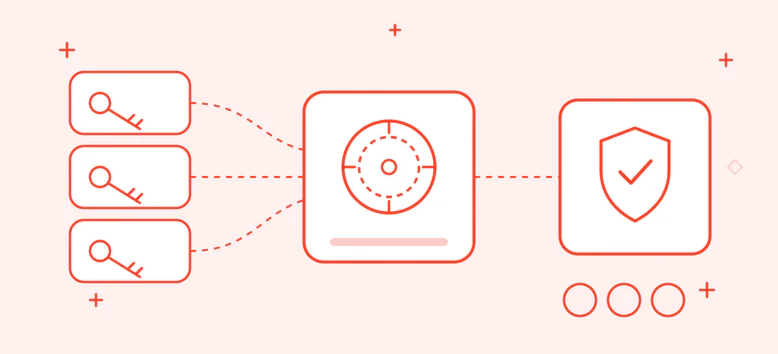
Multi-Signature Wallets: Never rely on a single person to move large funds. Implement a "2-of-3" multi-signature setup, where a transaction requires approval from multiple devices or key holders.
Role-Based Access: Your support staff needs to see transaction statuses, but they should never have "withdraw" permissions. Restrict private key access to executive leadership only.
Hardware Security: For any funds you choose to hold, the best way to accept crypto payments securely is to settle them into a hardware wallet rather than leaving them on a web-based exchange.
Start Accepting Crypto with B2BINPAY
In 2026, the question is no longer "should" you accept crypto, but "how fast" can you integrate it. With stablecoin settlement volumes now competing with major card networks, digital currencies have graduated from a niche experiment to a dominant global payment rail.
By learning how to accept cryptocurrency as payment, you are doing more than just adding a checkout button. You are lowering your transaction fees, eliminating chargeback fraud, and opening your doors to a digitally native economy that controls trillions of dollars in wealth. The infrastructure is ready, the customers are waiting to be paid globally, and the risk of being left behind is now far greater than the risk of moving forward.
FAQs
Is it safe to accept Bitcoin as a payment?
Yes, as long as you don't try to manage the cryptography yourself. In fact, accepting bitcoin as payment through a regulated gateway is operationally safer than accepting credit cards. Why? Because there is zero risk of chargeback fraud. Once the blockchain verifies the funds, the money is yours. The only "risk" is price volatility, which professional gateways eliminate by instantly converting the crypto into fiat currency (like USD or EUR) the moment the transaction clears.
Why is it difficult for businesses to accept Bitcoin?
Historically, the difficulty came down to two fears: losing value to volatility and breaking the accounting books. Business owners didn't want their $100 sale to turn into $90 overnight. Plus, figuring out how to accept bitcoin in a way that satisfied the tax man was a headache. Fortunately, modern 2026-era payment processors have automated both issues - offering instant stablecoin conversion to fix the price and automated data exports to clean up the accounting.
What is the most accepted crypto payment?
While Bitcoin (BTC) has the brand recognition, USDT (Tether) and USDC are the actual workhorses of global commerce. In 2026, stablecoins account for the majority of merchant transaction volume because they offer the speed of blockchain without the price swings. Ethereum (ETH) and Litecoin (LTC) are also widely accepted, particularly for digital goods, but stablecoins are the standard for B2B.
What percent of businesses accept Bitcoin?
While exact global numbers are messy, the trend is undeniable: adoption surged by over 40% in the last year alone. It is no longer just niche tech companies. Everyone from massive retailers like Microsoft and Overstock to local cafes using iPad registers has integrated crypto payments. In the B2B sector, the adoption rate is even higher, as companies use it to bypass slow international wire transfers.
Can small businesses accept cryptocurrency?
Absolutely. Honestly, it is often easier for a small business than a large corporation because you have less red tape. You don't need a dedicated IT team. Most small businesses simply install a plugin (like for WooCommerce or Shopify) or use a QR-code app on a tablet. The setup takes less than an hour, and you can start accepting global payments immediately with no upfront cost.
How do taxes work on crypto payments?
In most jurisdictions (including the US and UK), receiving crypto is treated as a taxable event equal to receiving cash. If you sell a product for $100 in Bitcoin, you record $100 in gross income. The complexity only kicks in if you hold that Bitcoin and it rises in value; you may then owe Capital Gains Tax on the profit. This is why most businesses auto-convert to fiat immediately - to simplify their tax liability to just standard income.
Subscribe to our channel so as not to miss new publications
SubscribeWallet as a Service — Enterprise
Merchant Wallet
Accept Crypto. Settle Fiat.
Seamless checkout for Forex, iGaming & e-commerce. Auto-convert 70+ tokens to USD/EUR — zero volatility risk.
70+
Currencies
0.25%
Min Fee
0%
Reserve
Enterprise Wallet
Automate Treasury. Cut Manual Work.
Real on-chain wallets with auto-sweeping, auto-payouts, and AML built in. Built for institutional scale.
350+
Currencies
20+
Blockchains
24/7
Support
DeFi App
Non-Custodial On-Chain Payments.
Audited multisig invoicing for DeFi teams. You own your keys, you control your funds. Free UI tier.
8+
Chains
Free
UI Tier
Multisig
Security
Crypto Payment Gateway
Ready to Protect Your Margin?
Join 983+ businesses that use B2BinPay to eliminate payment friction, stop account freezes, and settle in fiat — instantly.
Create an account- Onboarding in <24 hours
- 0% Rolling Reserve
- Regulated VASP · El Salvador


Subscribe
Join our community and stay tuned for the latest news. No spam, unsubscribe anytime
Thank you! Your submission has been received!