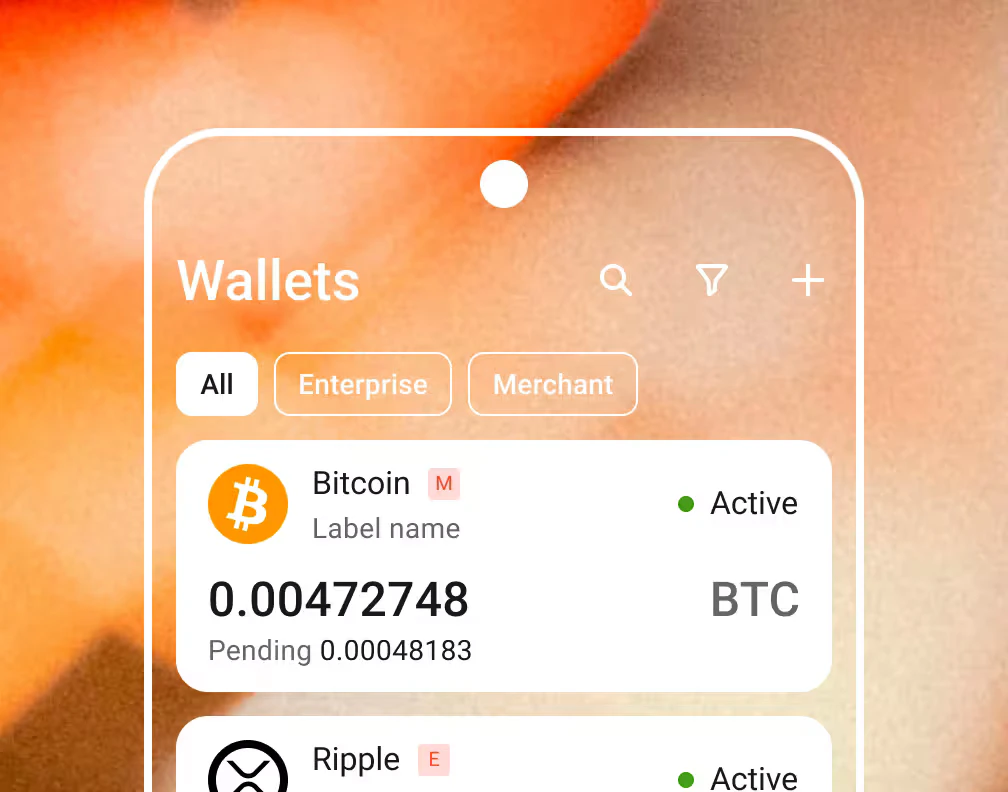
Wallet
as a Service (WaaS)
B2BINPAY offers secure wallets for storing, receiving, and sending digital assets with ease. Choose our wallet-as-a-service (WaaS) platform for top-notch security and seamless wallet management
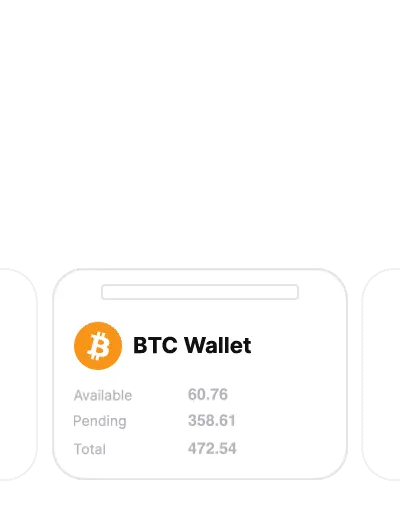
- $5.1B
- Total Amount
- Processed in incoming transactions by 2025
- 6.7M
- Transactions
- Completed using our solution by 2025
- 983
- Business Customers
- Became our clients
by 2025
Token Collection
B2BINPAY’s wallet infrastructure supports dozens of tokens. From BTC to ETH, DOGE, DAI, ADA, and many more, you’ll have a secure wallet to send and receive deposits from across the globe
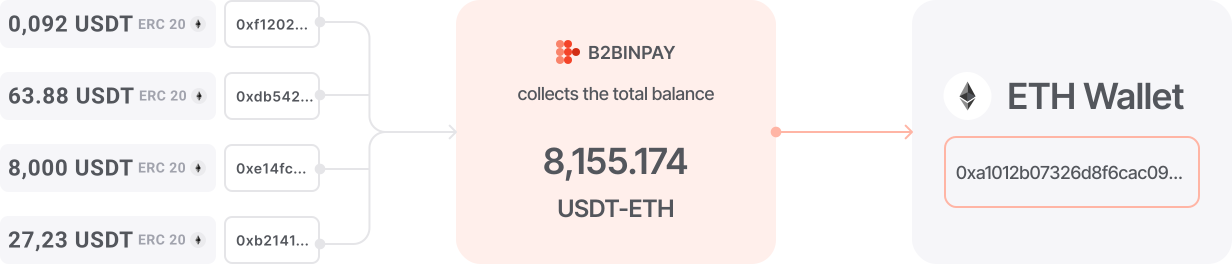
-48% of Gas Fee*
Our digital wallet solution significantly reduces gas fees and improves transaction speed. Commission is paid only once**, reducing gas fees by roughly half and yielding significant savings for high-volume transactions
Created and salted N addresses to reserve them for your wallet
- Deposit Address 1
- Deposit Address 2
- Deposit Address 3
- Deposit Address 4
Collected tokens from many deposit addresses into your wallet
*In comparison with the first version of B2BINPAY
**The commission in ETH, BNB (BSC), TRX, ERC20, BEP20 and TRC20 tokens is debited from the global wallet
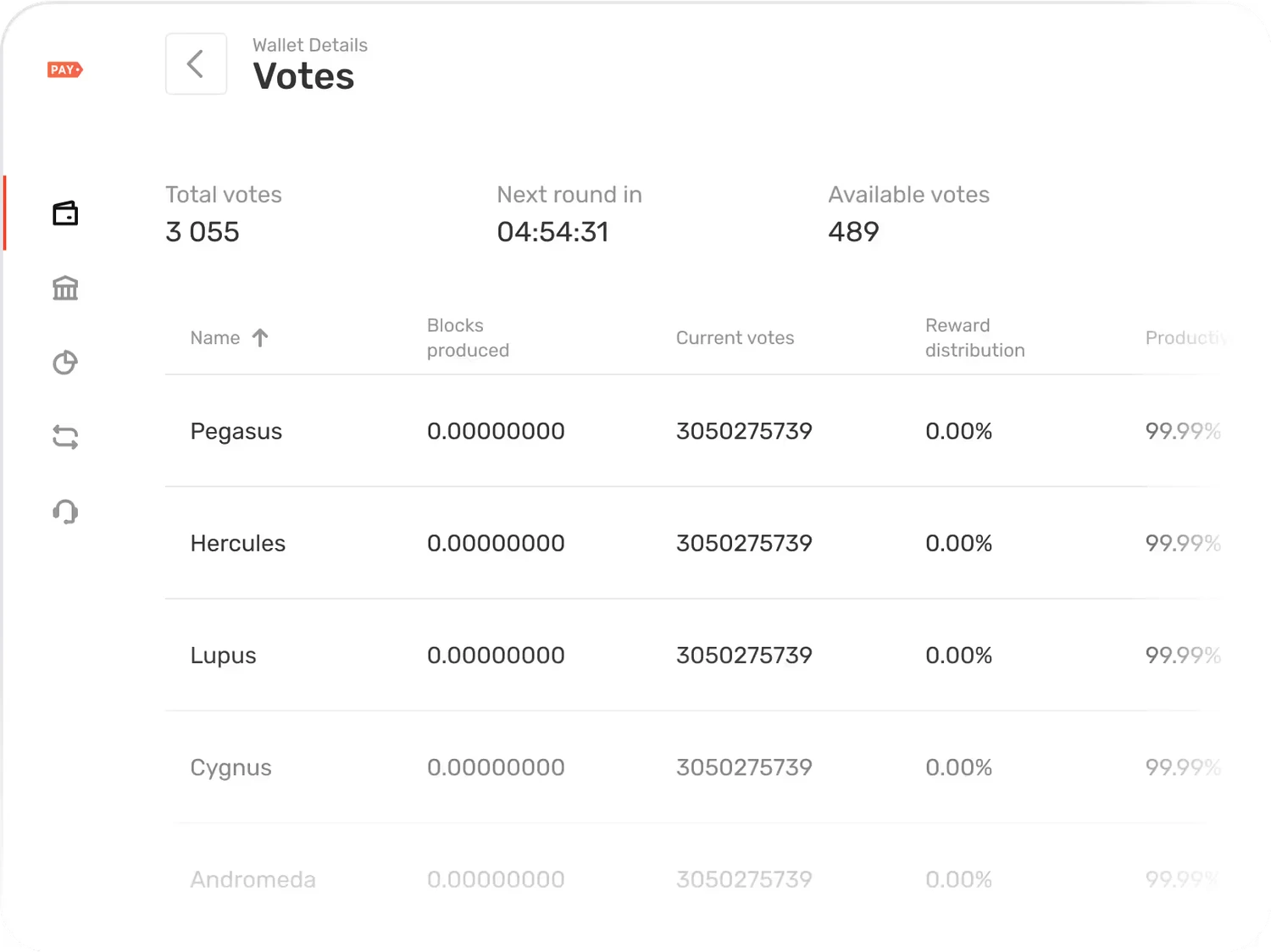
TRX Staking:
Earn While You Transact
The tokens in your crypto wallet can generate passive income via staking. You can stake any amount of TRX tokens and earn annual yields that vary according to network conditions. The simplified interface and wallet integration make it easy to stake tokens and claim your yield when due
Benefits

Passive yield. Staked tokens generate annual yields of 3-5%, depending on network conditions. Our wallet-as-a-service platform offers competitive staking rates

Fees eliminated. Users can reduce blockchain fees by converting staked TRX into bandwidth and energy points
Core Wallet Features
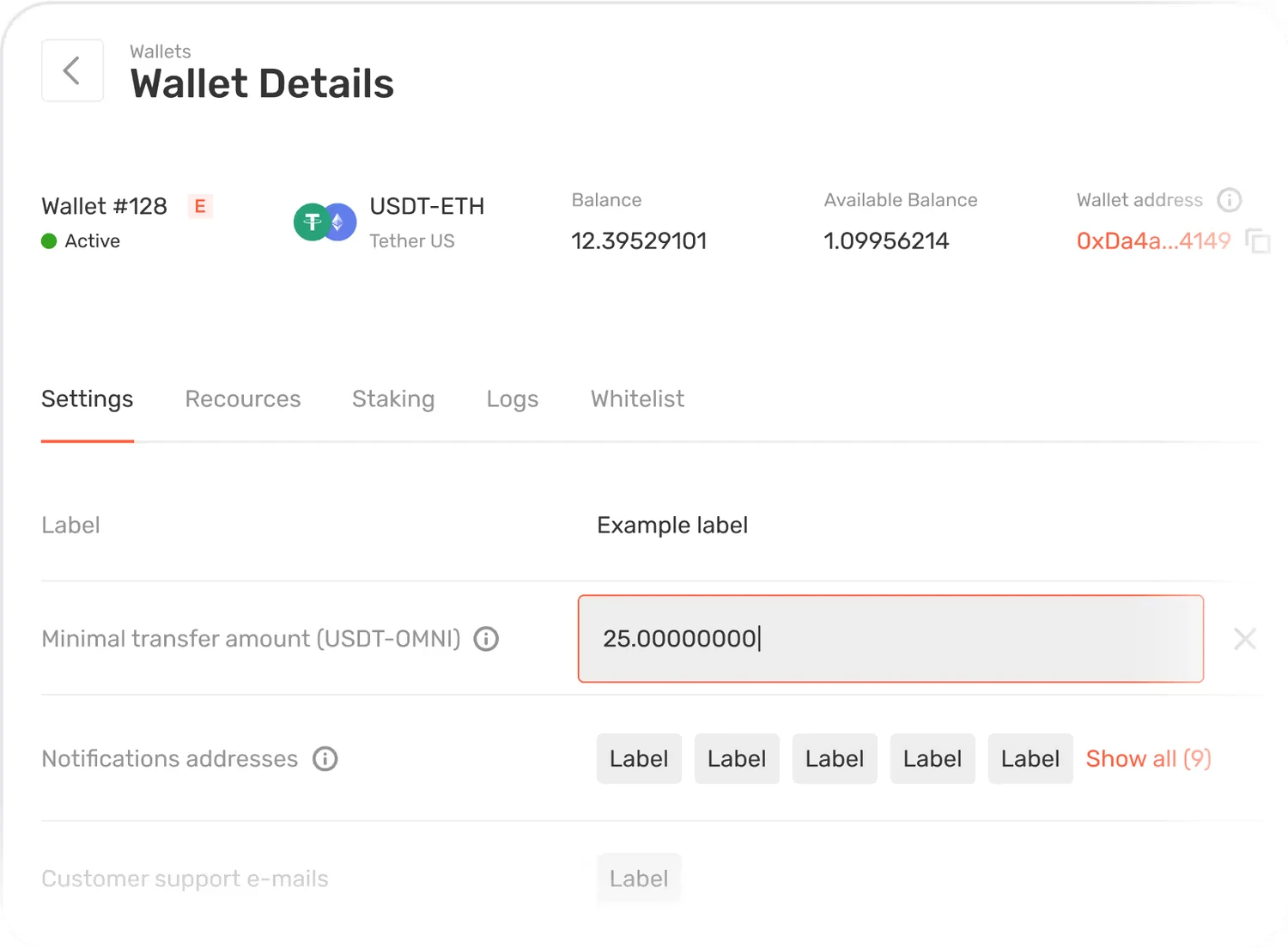
Minimal Transfer Amount
You can specify a minimal transfer amount for your wallet, ensuring the system doesn’t accept deposits below that amount. This management feature differentiates B2BinPay’s wallet-as-a-service from many competitors
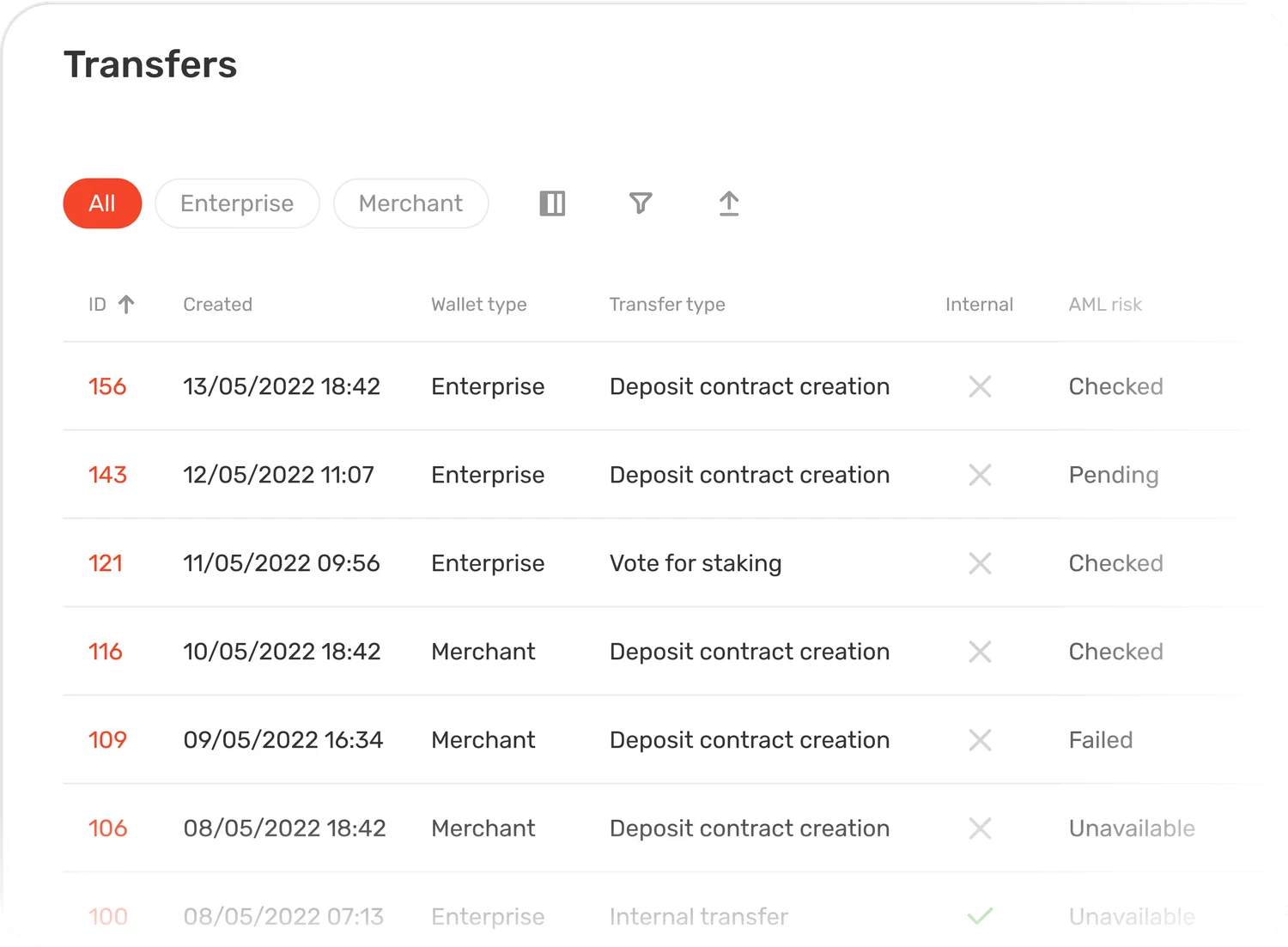
Activate the wallet yourself
You can activate the blockchain wallet yourself by sending coins to it. With your wallet activated, you can begin receiving or sending tokens seamlessly. A self-activated, non-custodial wallet provides more control over your tokens. You’ll hold your private keys, giving complete control over the assets in your wallet. There’s no reliance on a third party to execute transactions
User Mistakes
We automatically duplicate wallet addresses across Ethereum (ETH), Polygon (MATIC), Avalanche (AVAX), and other blockchains to prevent the loss of funds. For example, a USDT wallet on the BEP20 blockchain will be duplicated on the ERC20 blockchain. Hence, if someone mistakenly sends tokens via the ERC20 blockchain instead of BEP20, the tokens won’t be lost because of the error


End-User is Wrong in the Blockchain


Automatically duplicates the address on another blockchain
Secure & Safe
B2BINPAY incorporates various wallet security features to safeguard your funds. Our web3 wallets use sophisticated encryption keys (controlled by you) and multi-factor authentication for extra security. They also incorporate transaction signing to prevent unauthorized or fraudulent transactions. You can choose to manually approve every outgoing transaction and block specific addresses from transacting with your multi-chain wallet. A secure wallet is a click away with B2BinPay’s WaaS service
Flexible Confirmations
If you want to receive a callback before receiving blockchain confirmations, you can specify the number of confirmations

Callback Tags
There is the possibility to add a callback URL with tags during the creation of deposits

Solutions for various industries
 E-commerce
 Forex and CFD Brokers
 Crypto Exchanges
 Gambling
 Merchants
 Car Dealership
 Converters
 Crypto Brokers
 Gaming
 Hedge/ Investment Funds
 Legal and Consulting
 Multi-Asset Brokers
 Margin Exchanges
 Real Estate
 Travel Industry
 Mobile Wallet Apps
 Resto
 Adult
 Donations
Learn More about WaaS
 B2BINPAY 26.3.1: Sender Addresses on Incoming Transfers, Support Inside the Account, Staff 2FA
 B2BINPAY 26.2.16: Improved Security, Layered Approvals, Failed Collections Retry, and a Quiet Captcha
 B2BINPAY 26.2.14: Faster Rates API, Steadier Deposits, One-Form Sign-Up
 B2BINPAY 26.2.10: Toncoin to Gram, Fee Control on AML Refunds, Commissions Ladder in the Client UI
FAQ
Wallet-as-a-service is an infrastructure solution that enables companies to store, receive, and send cryptocurrencies via secure wallets. It enables crypto integration for businesses without needing to build infrastructure from scratch. For example, a bank can utilize a WaaS platform to handle token management for clients without needing to build expensive infrastructure from scratch. Fintech companies can also leverage WaaS platforms to offer crypto custody services for third parties. WaaS platforms provide cross-chain support and compliance solutions to facilitate cryptocurrency adoption by both tech and non-tech companies.
A wallet service provider offers the infrastructure for creating and managing crypto wallets. These user wallets can store, send, and receive digital tokens from anywhere in the world. Users can also buy or sell digital assets directly from their wallets. Wallet API integration services enable seamless connection to external platforms. For example, you can connect your non-custodial or custodial wallet to a third-party cryptocurrency exchange and trade safely.
Wallet-as-a-service (WaaS) and software-as-a-service (SaaS) serve different purposes, although they follow similar service delivery models. Wallet-as-a-service provides businesses with the necessary infrastructure to adopt cryptocurrency without having to build everything from scratch. They allow businesses to store, send, and receive large amounts of digital tokens through a secure wallet. Businesses can access WaaS infrastructure on a subscription basis, which saves money compared to building the infrastructure themselves. They also pay transaction fees, which vary depending on the token, volume, network congestion, and other factors. Software-as-a-service is a general model where businesses access software over the internet, typically on a subscription basis. Examples of SaaS services include video conferencing, corporate email, cloud storage, project management, and developer tools. Businesses pay monthly or annual fees to access these services and maintain smooth operations.