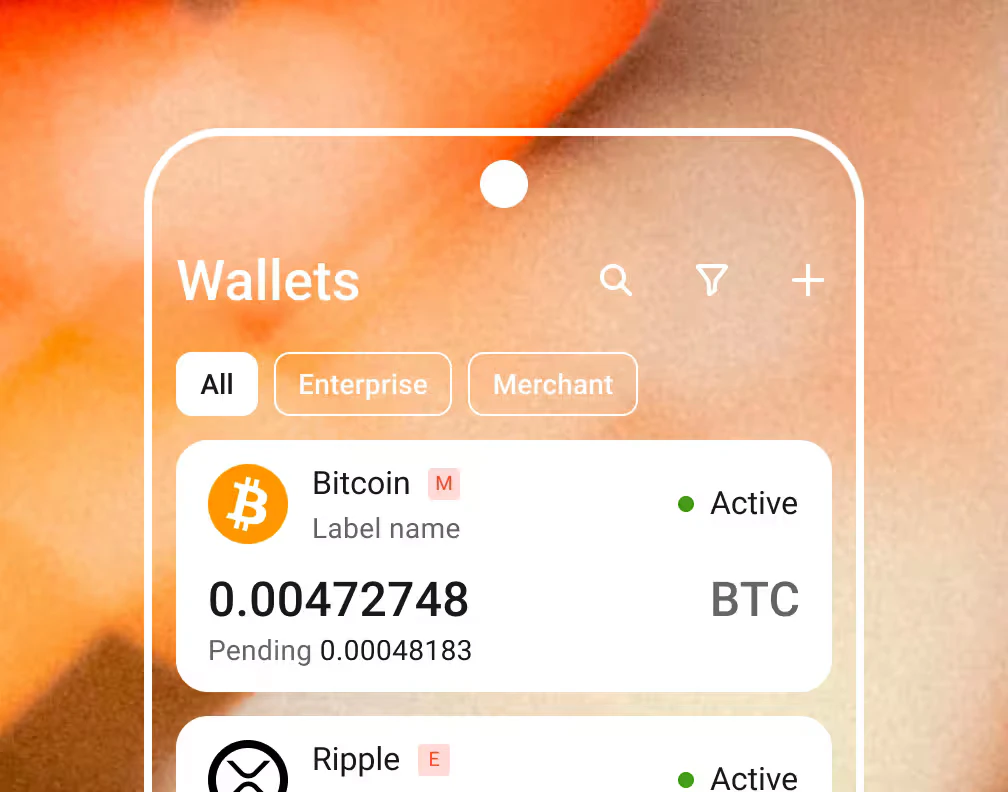







Louer des maisons Passerelle de paiement
Acceptez les paiements sans effort grâce à notre passerelle de paiement cryptée. Profitez de faibles frais de traitement, de paiements rapides entre cryptomonnaies et fiat et d'un flux de paiement fluide
Créer un compteN° de commande248
616 900,00 DOLLAR AMÉRICAIN
FACTURE
 0xij9r5... y8lq3by
Fonctionnalités de traitement des paiements cryptés
Support multi-actifs
Notre processeur de paiement crypté prend en charge plus de 350 devises numériques

Sécurité
Nous avons mis en œuvre les meilleurs protocoles de sécurité pour garantir des paiements cryptographiques sûrs et sans frontières
Évolutivité
B2BINPAY peut gérer la demande croissante sans tracas. Vous pouvez continuer à accepter des paiements de manière fluide, même si le volume de vos transactions augmente
Interface conviviale
Nous fournissons une interface utilisateur intuitive pour intégrer l'API de paiement et surveiller toutes vos transactions
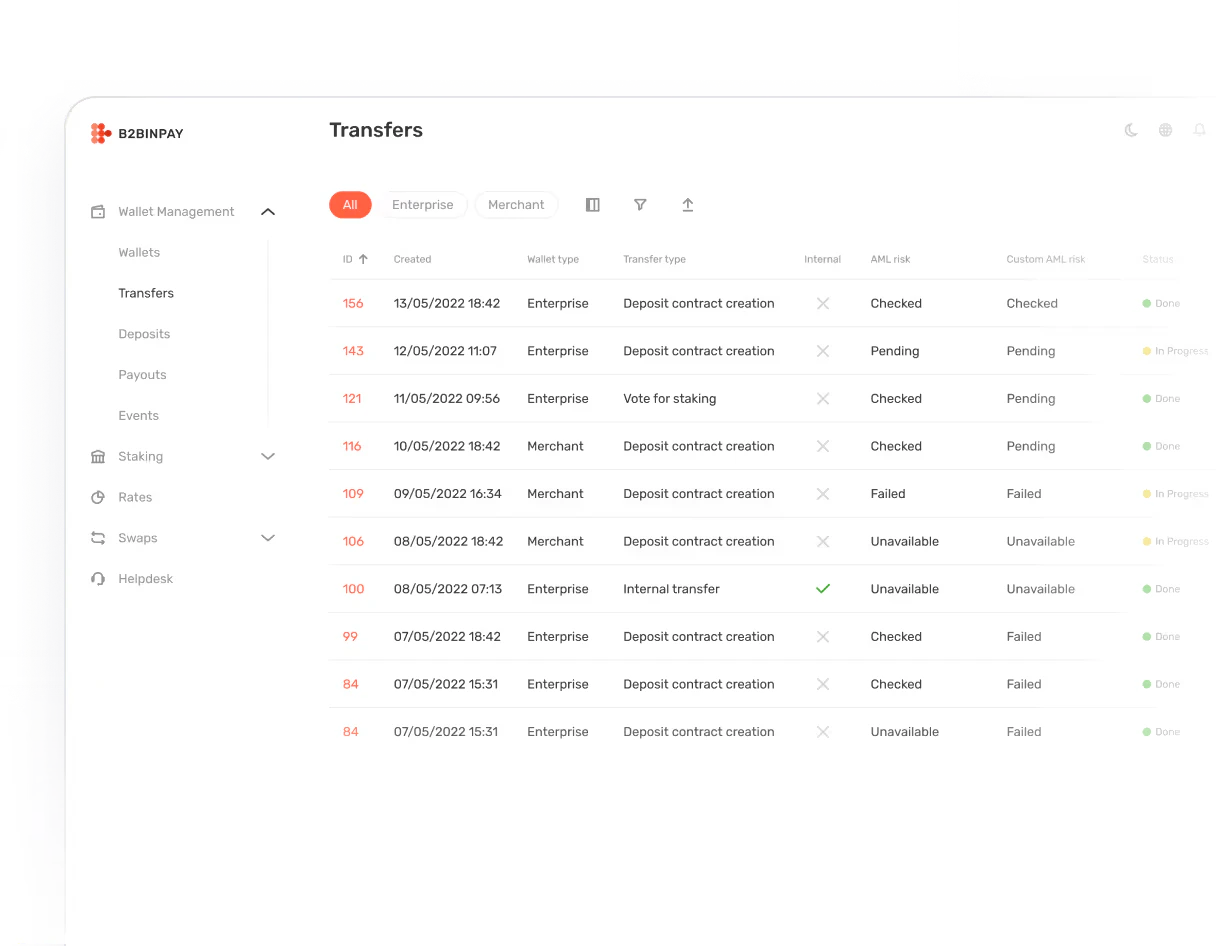

Nous avons créé un outil convivial écosystème crypto tout-en-un pour vous aider à développer votre entreprise

Arthur Azizov
PDG et fondateur
- 5,1 B
- Montant total
- Traitées dans les transactions entrantes d'ici 2025
- 6,7 M
- Opérations
- Terminé à l'aide de notre solution d'ici 2025
- 983
- Clientèle commerciale
- Nous sommes devenus nos clients d'ici 2025
L'avenir des entreprises repose sur la blockchain
Échange
Convertissez n'importe quelle transaction vers le solde de votre portefeuille : USDT, USDC, BTC, TUSD, EUR, USD

Envoyer
Envoyez n'importe quelle cryptomonnaie à n'importe qui, pratiquement n'importe où dans le monde, comme alternative à l'envoi d'argent

Échange
Convertissez n'importe quelle partie de votre solde Bitcoin en une autre cryptomonnaie chaque fois que vous en avez besoin

Boutique
Vous pouvez stocker votre Bitcoin et de nombreuses autres crypto-monnaies dans votre portefeuille B2BINPAY

Accepter
Acceptez les paiements en BTC, ETH, XRP ou USDT et USDC dans 9 blockchains et

Nos partenaires
-

fournisseur de liquidités
-

plateforme de vérification
-
outil d'analyse

Avantages
Mondial

Envoyez, stockez, échangez et acceptez des paiements numériques à tout moment, pratiquement n'importe où dans le monde
Aucune rétrofacturation

Un service transparent et simple. Les transactions blockchain sont irréversibles, sans rétrofacturation, sans frais récurrents ni frais cachés
Indépendant

L'absence de tiers impliqués dans les transactions signifie qu'il n'est pas nécessaire de dépendre des banques et des gouvernements.
Sécurisé

Protection contre les attaques DDoS, cryptage complet des données et transparence de la blockchain, associés à un paiement sécurisé
Illimité

Tout montant peut être transféré conformément à vos besoins. Il n'y a aucune restriction en termes de limites supérieures
Aussi rapide que l'éclairage

Profitez de transactions plus rapides dans le monde entier, ce qui n'est pas possible avec les paiements bancaires traditionnels
Intégration facile

Nous proposons une intégration simple des paiements par crypto-monnaie dans votre système via une API. Nos experts vous aideront tout au long de ce processus
Pas de réserve mobile

En l'absence de réserve mobile, vous n'avez pas besoin de geler un pourcentage de votre argent puisqu'il n'y a pas d'autorité centrale ni de rétrofacturation
KYT

L'intégration d'un service de conformité KYT en matière de cryptomonnaies permet de prévenir le blanchiment d'argent et d'autres activités de nature illicite
Posez toutes vos questions à notre expert
Nos experts sont toujours disponibles pour répondre à vos questions sur les paiements cryptographiques sans frontières.
Entrez en contactOptimisé pour votre entreprise
Gestion du portefeuille
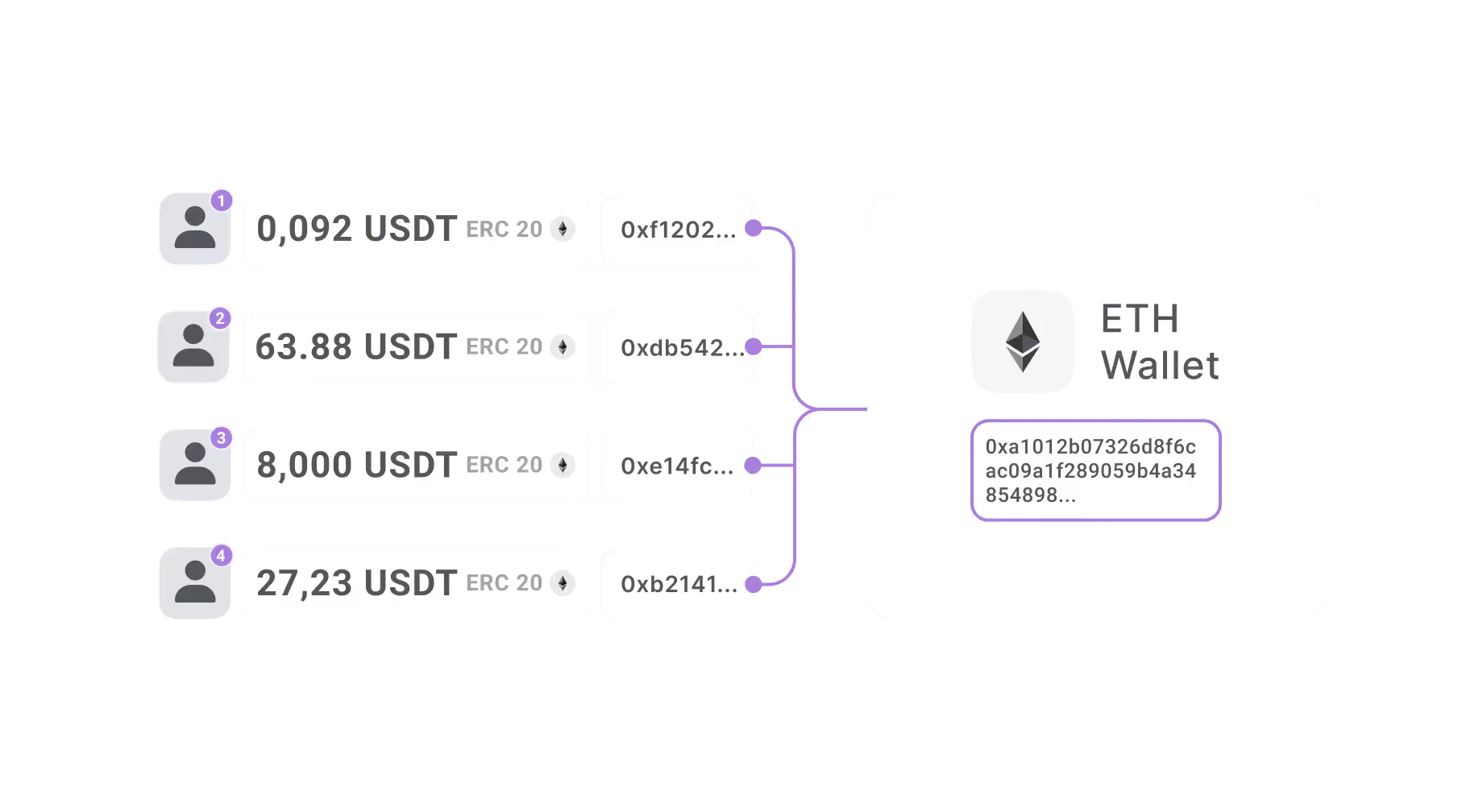
Gérer plusieurs portefeuilles sans contrôle est frustrant
Solution: La génération de portefeuilles personnels et les règlements automatisés vous donnent un contrôle total. Gérez plusieurs portefeuilles sans effort
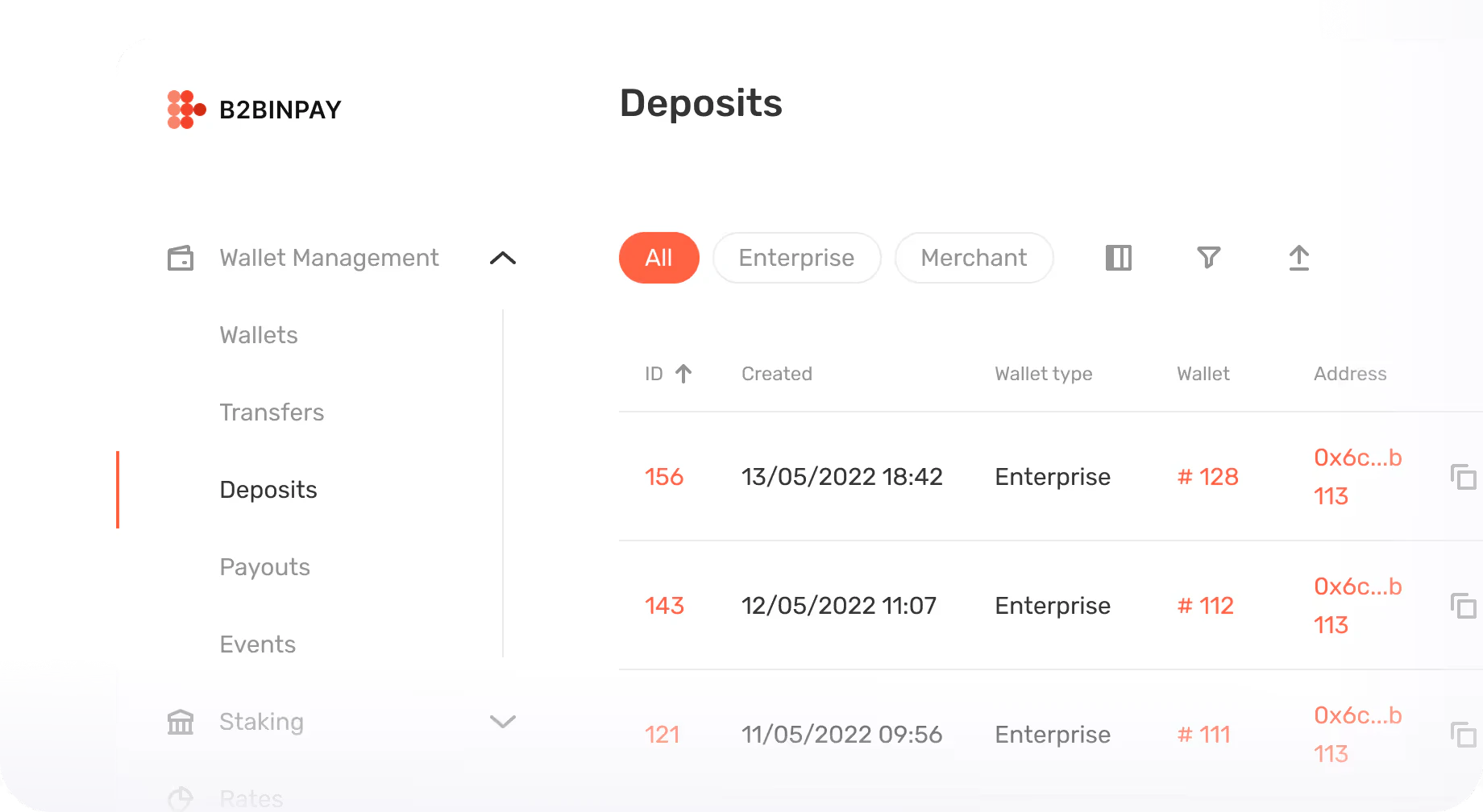
Comptes unifiés
Consolider les soldes de tous les comptes est un problème
Solution: Combinez les fonds de tous les comptes de dépôt en un seul solde. Simplifiez la gestion des ressources et gagnez du temps
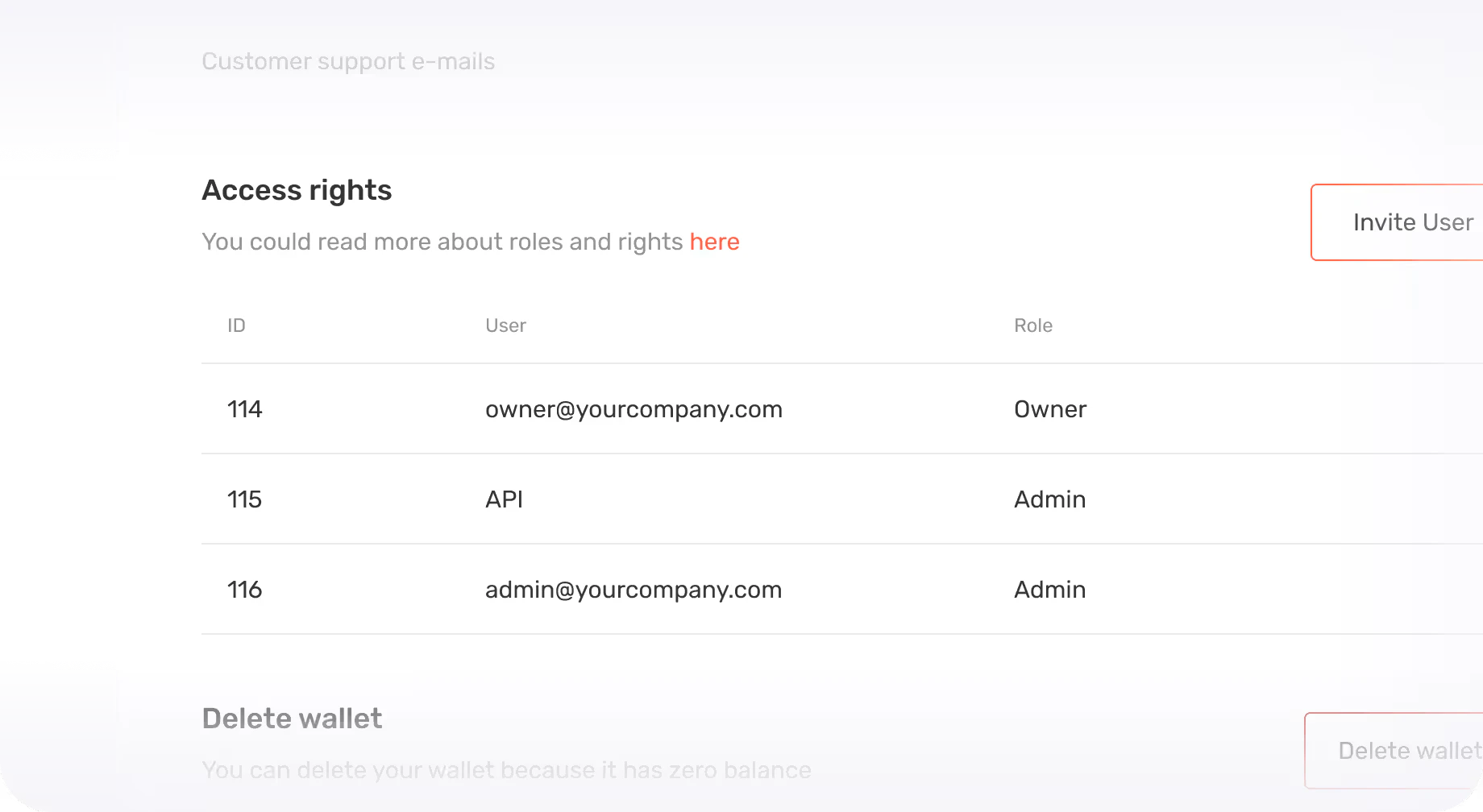
Sécurité multicouche
Les violations de données et les erreurs manuelles menacent votre entreprise
Solution: La 2FA, les listes blanches de portefeuilles, les droits des utilisateurs et les listes blanches IP protègent vos données et vos fonds
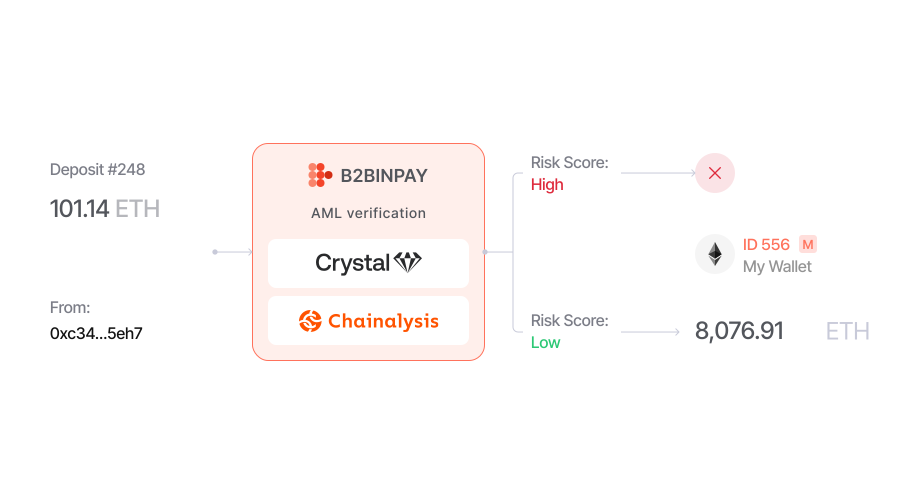
Prévention des fraudes
La fraude et les activités suspectes menacent vos finances
Solution: KYT (Know Your Transaction) vérifie chaque transaction. Profitez de retraits transparents, sécurisés et sans souci
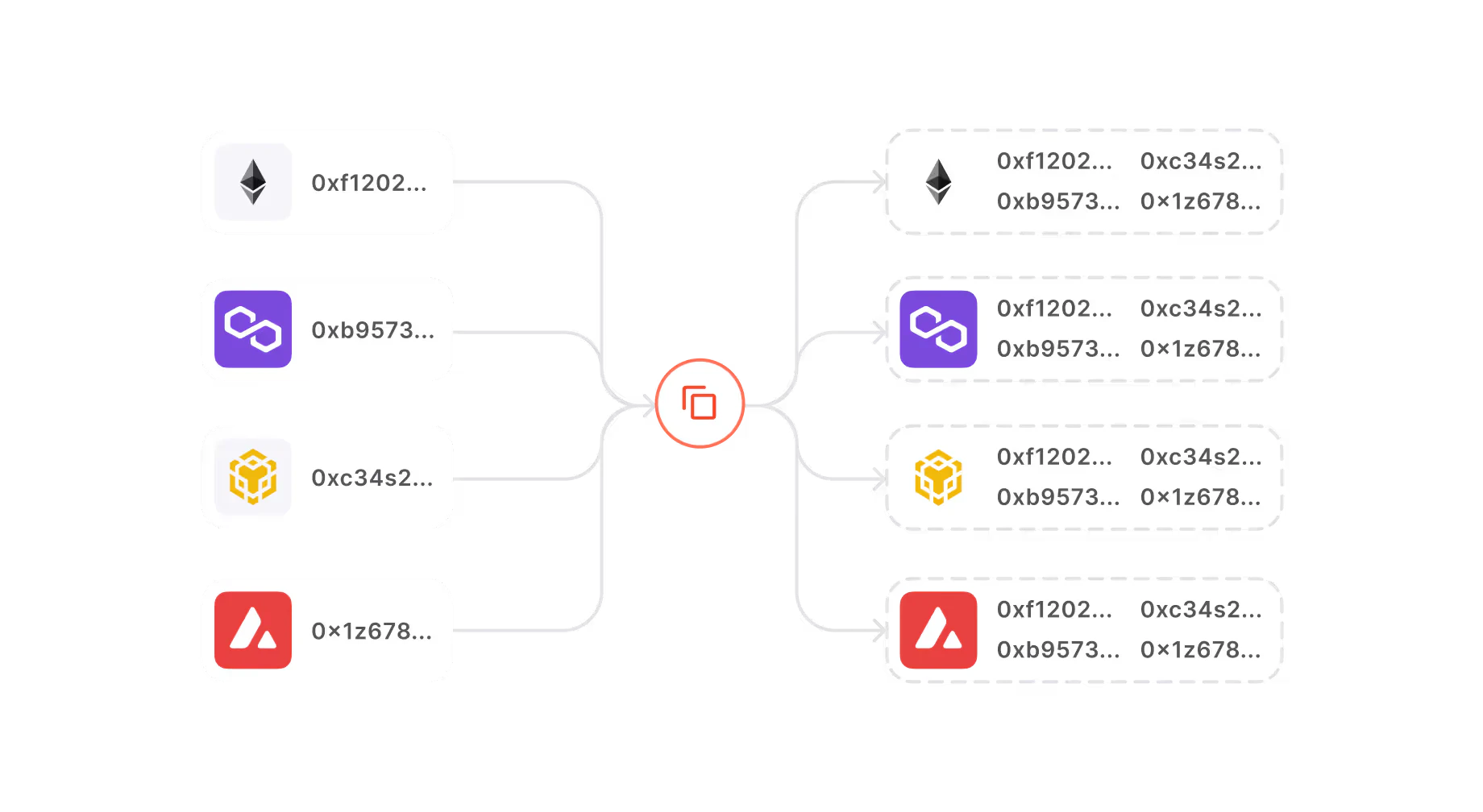
Adresses de portefeuille infaillibles
Les erreurs humaines dans la facturation manuelle perturbent les opérations
Solution: Les portefeuilles dupliqués pour des devises similaires réduisent la confusion. Évitez les erreurs et améliorez l'efficacité du support client
La bonne solution pour toutes vos entreprises
 Commerce électronique
  Courtiers Forex et CFD
  Plateformes d’échange de cryptomonnaies
  Jeux d’argent
  Commerçants
  Concessionnaires automobiles
  Services de conversion
  Courtiers en cryptomonnaies
  Jeux vidéo
  Fonds spéculatifs et d’investissement
  Services juridiques et conseil
  Courtiers multi-actifs
  Plateformes de trading sur marge
  Immobilier
  Secteur du voyage
  Applications de portefeuille mobile
  Restauration
 Traitement des paiements cryptographiques
Acceptez sans effort les paiements cryptographiques dans les principales pièces et convertissez-les facilement en fiat, en autres crypto-monnaies ou en pièces stables
Portefeuille en tant que service
Une solution robuste pour recevoir, stocker et envoyer des devises numériques, sécurisée et simple à utiliser
API de paiement
Utilisez notre API blockchain pour connecter votre plateforme en quelques minutes. Notre documentation détaillée vous aide à intégrer l'API sans tracas et à commencer à accepter des jetons via notre plateforme de paiement crypté. En savoir plus
Comment démarrer
-
INSCRIVEZ-VOUS pour B2BINPAY
-
Recevez vos clés d'API uniques
-
PARTAGEZ les clés API avec votre développeur pour intégrer B2BINPAY dans votre boutique
-
Testez le système de paiement décentralisé sans frais dans notre environnement sandbox
-
Passez en direct et commencez à accepter les paiements cryptographiques transfrontaliers sans tracas
- Créez un compte




Transactions hors chaîne
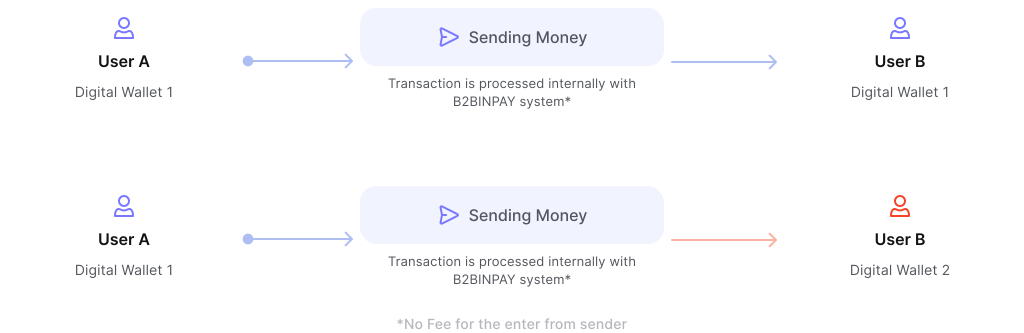
B2BINPAY dispose d'un système de transaction propriétaire qui permet de transférer des fonds en dehors de la blockchain. Cette approche accélère les transactions et réduit les frais de traitement
Connaissez vos frais
Transaction pour
Traitement des paiements cryptographiques
Entrant
- 5 à ∞ millions de dollars
- 0,25 %
- 3 à 5 millions de dollars
- 0,30 %
- 1 à 3 millions de dollars
- 0,35 %
- 0 à 1 million de dollars
- 0,40 %
Sortant
- Sans frais
- 0,00 %
Transaction pour
Portefeuille en tant que service (WaaS)
Entrant
- Sans frais
- 0,00 %
Sortant
- 20 à ∞ millions de dollars
- 0,025 %
- 10 à 20 millions de dollars
- 0,030 %
- 5 à 10 millions de dollars
- 0,035 %
- 3 à 5 millions de dollars
- 0,040 %
- 1 à 3 millions de dollars
- 0,045 %
- 0 à 1 million de dollars
- 0,050 %
Blockchains et devises prises en charge
Nous donnons à votre entreprise les moyens d'accepter l'USDT de manière fluide sur 9 chaînes de blocs majeures, avec de nombreuses options supplémentaires pour répondre à vos besoins uniques.


Réglementé Fournisseur de services d'actifs virtuels


Presse à propos de nous
 Rapid Change, Real Impact: Vit Shtyrkin on AI & Crypto Tools
  Solana ETFs See Record Outflow as 21Shares' TSOL Bleeds $42M









Mises à jour et informations sur les produits
 B2BINPAY 26.3.1: Sender Addresses on Incoming Transfers, Support Inside the Account, Staff 2FA B2BINPAY 26.3.1 puts the sender address of every incoming payment in the transfer object and the callback, adds a support messenger inside the account, and brings 2FA to staff users.
  B2BINPAY 26.2.16: Improved Security, Layered Approvals, Failed Collections Retry, and a Quiet Captcha
  B2BINPAY 26.2.14: Faster Rates API, Steadier Deposits, One-Form Sign-Up
  B2BINPAY 26.2.10: Toncoin to Gram, Fee Control on AML Refunds, Commissions Ladder in the Client UI
 Par des développeurs pour des développeurs
Les tests constituent une partie importante du processus d'intégration de B2BINPAY, qui permet d'éliminer tout problème potentiel avant la mise en ligne. Contactez-nous pour en savoir plus

Fonctionnalité
- Cryptomonnaie Testnet
- Limite de devises jusqu'à 6
- Spécifier les plages de dépôt
- Définir la vitesse de transaction

Intégrations
- avec B2CORE
- avec BridgerPay
- avec Back-office FX
- avec Caissier de Praxis

Opérations financières
- Envoyer de la monnaie numérique
- Créer un paiement
- Convertir des crypto-monnaies
- Stocker des cryptomonnaies
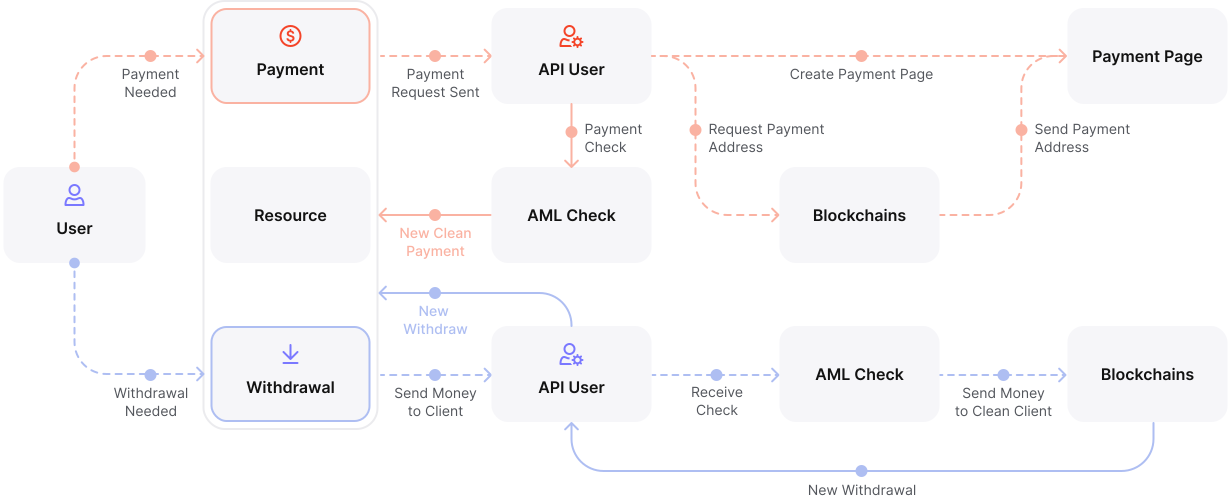
Intégration rapide et facile via l'API Rest. Notre technologie de pointe vous permet d'intégrer la facturation et de gérer les acquisitions et les transferts exactement comme vous le souhaitez
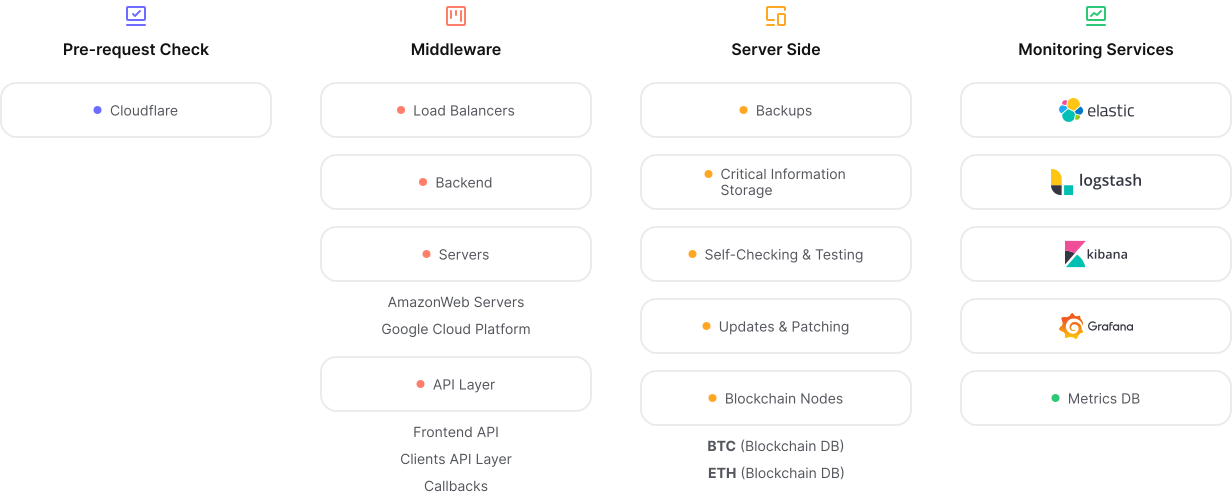
Notre infrastructure fonctionne sur plusieurs serveurs répartis dans plusieurs centres de données, ce qui garantit une livraison de données ultrarapide et une latence la plus faible possible. Nous disposons d'un hébergement redondant et d'environnements à charge équilibrée pour garantir une fiabilité maximale




















Êtes-vous prêt à améliorer votre jeu cryptographique ?
Rejoignez les entreprises qui ont déjà démarré avec succès avec B2BINPAY
FAQ
Le traitement des paiements par cryptomonnaie prend généralement quelques minutes. Dans certains cas, les transactions cryptographiques sont réglées instantanément.
Nous mettons constamment en œuvre des mises à jour de produits pour fournir de nouvelles fonctionnalités aux clients et assurer la sécurité de notre plateforme.
Vous pouvez suivre les transactions et les paiements en temps réel depuis le tableau de bord de votre compte B2BINPAY. La facilité de surveillance est l'un des nombreux avantages du choix de notre système de paiement crypté.
Nous fournissons une documentation API détaillée pour l'intégration des passerelles de paiement cryptées. Notre équipe d'assistance peut également vous guider à travers les étapes d'intégration de notre solution de paiement crypté.
Notre passerelle cryptographique prend en charge la plupart des pays. Nous ne fournissons pas de services aux résidents ou aux entreprises basés en Afghanistan, au Canada, en République centrafricaine, à Cuba, en Érythrée, en Iran, en République populaire démocratique de Corée (RPDC), en Libye, au Myanmar, en Russie, en Somalie, au Soudan du Sud, au Soudan, en Syrie, aux États-Unis d'Amérique, au Venezuela, au Yémen ou dans les régions de Crimée, Donetsk, Louhansk, Kherson et Zaporizhzhia en Ukraine.
B2BINPAY fournit une solution robuste capable de gérer sans problème des volumes de transactions croissants. Vous pouvez développer votre activité avec B2BINPAY sans vous soucier d'un ralentissement de la vitesse et de la fiabilité des transactions.
Oui, vous pouvez effectuer des micro-paiements cryptés avec B2BINPAY. Contrairement aux plateformes de traitement des paiements traditionnelles, nos faibles frais de traitement permettent aux clients d'accepter des micropaiements.
Les transactions blockchain sont généralement irréversibles, ce qui complique les remboursements de paiements cryptographiques pour une entreprise. Cependant, vous pouvez renvoyer délibérément des jetons sur le portefeuille du destinataire dans le cadre d'un remboursement.
Nous n'avons pas de calendrier précis pour la mise à jour de notre API. Au lieu de cela, nous publions des mises à jour lorsque cela est nécessaire pour ajouter de nouvelles fonctionnalités, améliorer celles existantes ou corriger toute faille dans notre flux de travail d'intégration des paiements cryptographiques.
Vous pouvez personnaliser B2BINPAY en écrivant un code personnalisé pour notre API. Par exemple, vous pouvez définir un dépôt minimum pour les utilisateurs de votre plateforme via l'API.
B2BINPAY fournit un portefeuille multidevises qui vous permet de gérer plusieurs jetons à partir d'un seul endroit. Vous pouvez vous inscrire dès aujourd'hui et obtenir ce portefeuille pour recevoir des paiements en cryptomonnaie.

Gérez vos cryptos partout dans le monde avec l'application mobile B2BINPAY