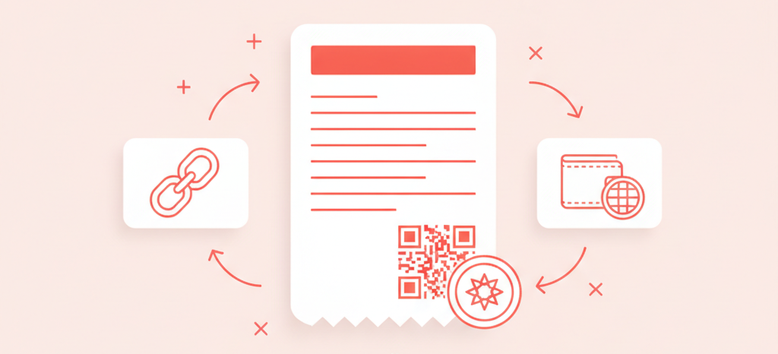



DAO treasury management is the operating discipline that decides whether a protocol can fund payroll, ship grants, and survive the next drawdown. It is not a yield strategy — it is a control system: who can move funds, under what approval rules, with what audit trail, and across which chains. Treasury operators at brokers, exchanges, prop firms, and serious DAOs need a framework that connects threshold signing to the same internal controls a CFO already enforces on fiat.
This guide compares the tools that matter: multisig wallets, approval queues, timelocks, stablecoin allocation, staking on idle reserves, and audit-ready reporting. Each section maps a piece of governance machinery to an operating outcome a treasurer can defend to an auditor.
Key Takeaways
- DAO treasury management is the discipline of governing shared digital assets so a protocol can fund operations, contributors, and growth without relying on unilateral control.
- Multisig wallets reduce single-point-of-failure risk by requiring M-of-N signers to approve treasury transactions before funds move.
- Approval queues and timelocks help DAOs structure contributor payouts and grant disbursements while adding a review window before execution.
- Treasury diversification across native tokens, stablecoins, and other reserves protects operational runway when market volatility compresses available funding.
- Clear approval workflows, reporting, and audit trails support internal controls, reconciliation, and compliance requirements for DAOs operating across multiple chains and stakeholders.
What DAO Treasury Management Actually Involves
DAO treasury management is the combination of asset oversight and governance execution: the rules, signers, and workflows that move on-chain capital from a community proposal to a settled transaction. It spans allocation, approval policy, reporting, and the operational runway that keeps contributors paid through volatile markets.
It is not passive custody. A wallet sitting behind a single key satisfies neither security nor governance. Operators need tools that constrain spending, route payouts, and surface cross-chain balances in one view, because unmanaged DAO treasuries fail operationally long before they fail technically.
The Core Components: Assets, Governance, and Disbursements
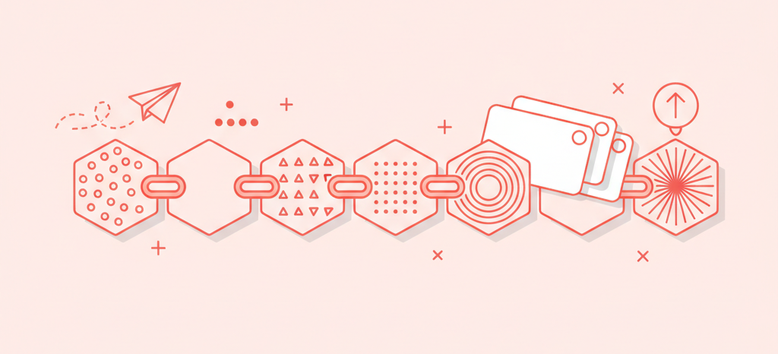
Three components work together. Assets cover the balance sheet: native governance tokens, stablecoins like USDC for payroll, blue-chip reserves, and tokenized real-world assets. Governance covers the rule layer: who proposes, votes, signs, and what thresholds apply. Disbursements convert policy into execution: contributor payouts, grant tranches, vendor invoices, and liquidity operations on chain.
Governance authorizes movement, multisig wallets enforce thresholds, and disbursement workflows translate an approved proposal into a settled on-chain transaction with a verifiable signer history.
Why Treasury Management Is a Survival Discipline, Not Just Optimization
The hard cases are not portfolio outperformance — they are governance attacks, smart contract loss, market drawdowns that cut runway in half, and payroll continuity during stress. Treasury work is risk management first.
The practical lens is operational runway. A defensible reserve covers 12–24 months of stable-asset operating expenses before any strategic capital is committed to higher-volatility positions. That separation lets the protocol absorb a 50% native-token drawdown without firing contributors or pausing grants.
Multisig Wallets: The Foundation of Secure Treasury Control
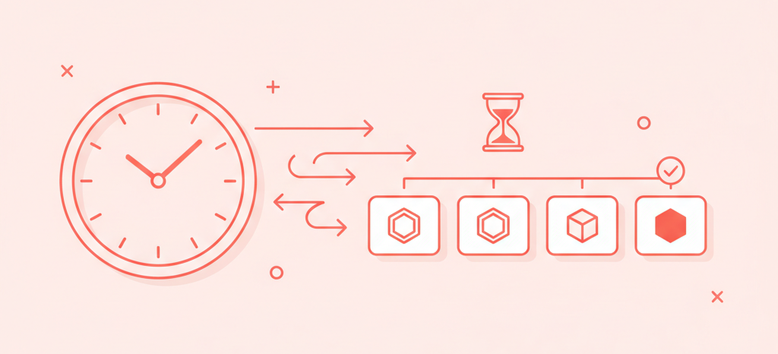
A multisig wallet is the minimum control layer for any DAO treasury, not an enterprise-only feature. Multisig wallets replace single-key access with threshold approval, meaning no individual can move funds alone and every disbursement carries a verifiable signer history.
Safe is the dominant industry benchmark and a reasonable default for new DAOs. Institutional operators should evaluate additional dimensions on top of the wallet itself: signer onboarding and revocation, policy controls (whitelisted destinations, spending limits per signer), exportable reporting, and how cleanly the wallet fits existing finance and compliance workflows.
How M-of-N Threshold Signing Works in Practice
In an M-of-N configuration, M signers out of N total must approve a transaction before it broadcasts. A 3-of-5 setup is the most common shape for small-to-mid DAOs. A proposer creates the transaction (a stablecoin payout, a grant tranche, a contract interaction), signers review the payload, three valid signatures collect on chain, and the transaction broadcasts.
That sequence maps cleanly to governance-to-execution traceability. A community vote initiates the proposal, the approval queue routes it to designated signers, threshold signing creates an immutable approval record, and on-chain execution closes the loop with a transaction hash any auditor can verify.
[[aa-cta-grey]]
Replace ad-hoc multisig with audited treasury infrastructure
B2BINPAY's non-custodial DeFi App ships with multisig accounts, approval queues, and fund-collection workflows out of the box, built for DAO operators who need institutional controls without writing custom treasury contracts.
[[/a]]
Choosing the Right Signer Configuration for Your Organization Size
Signer thresholds should track treasury size and operational maturity, not habit. A 2-of-3 setup fits a small team running a single product wallet. A 3-of-5 or 4-of-7 configuration suits growing DAOs with distributed contributors. Large protocols usually separate roles: operational signers for payroll, strategic signers for protocol upgrades, and a security council for emergencies.
The variables that matter are treasury size, geographic and time-zone distribution of signers, key-management hygiene, and segregation of duties. A 5-of-9 setup means nothing if four signers share a single office, or if the same person approves both the request and the disbursement.
Approval Queues and Disbursement Workflows
An approval queue is the operational layer between governance decisions and fund movement. It captures the request, runs it against policy, routes it to the right signers, holds it until thresholds are met, and produces a complete record once execution settles.
This layer matters most for recurring operations: monthly contributor payroll, milestone-based grants, vendor invoices, liquidity rebalances. Most DAO content treats multisig purely as theft prevention. Approval queues do something different. They standardize an auditable spending workflow at scale, which is what an external auditor or regulator actually wants to see.
Structuring Contributor Payouts and Grant Disbursements Through Approval Queues
A well-designed disbursement workflow runs in six steps: request submission, automated policy check (destination whitelist, amount cap, asset type), human approver review, threshold sign-off, on-chain execution, and reconciliation against the original request. Stablecoin payroll fits this shape: a recurring batch of USDC transfers to whitelisted addresses, signed once the threshold is met, reconciled monthly against an internal ledger. Milestone-based grants follow the same flow with a deliverable check inserted before the policy gate.
Timelocks as a Governance Safety Layer
A timelock is a delay between approval and execution. After signers approve a transaction, the timelock holds it for a defined window (often 24 to 72 hours) before the contract moves funds. That gap is the review window: delegates, contributors, or a risk team can detect a malicious proposal, a signer compromise, or a configuration error and halt execution.
Timelocks should not be applied uniformly. Emergency operations and routine payroll need fast paths; high-value strategic transfers, protocol parameter changes, and treasury rebalances are the right targets for delay.
Treasury Diversification and Stablecoin Allocation
Diversification in a DAO treasury is liability matching, not return chasing. Assets should be sorted by which expense they cover and how soon. Stablecoins back the next 12–24 months of payroll, grants, and infrastructure invoices. The native token funds long-horizon strategic capital (incentives, partnerships, liquidity mining) where price exposure is part of the thesis. Blue-chip reserves and tokenized real-world assets sit between, giving optionality without forcing concentration on the native token.
The practical mistake is holding 90%+ of the treasury in the native token. When the market compresses, the protocol is forced to sell into weakness to make payroll. A stablecoin reserve sized to operational runway breaks that loop.
Generating Yield on Idle Treasury Assets Through Staking
Staking idle assets is a treasury efficiency tool, not a speculative bet. The right question is not "how much yield can we earn" but "which reserves can be locked without breaking operational liquidity." Operating cash stays liquid. Surplus balances beyond the runway buffer are the candidates for staking.
B2BINPAY's staking infrastructure treats this as a treasury function. Proof-of-stake rewards on surplus reserves typically run in the 4–10% APY range depending on the asset and lockup. TRX resource staking is a special case: staked TRX converts into bandwidth and energy that materially reduces or eliminates transaction fees for high-volume payout operations. For a DAO running weekly contributor payroll on Tron, that is a measurable operating-cost reduction on top of any yield.
Lockup periods (commonly 30–90 days) and slashing risk on validator misbehavior are the real constraints. Size staked balances to the longest tolerable lock and keep the rest liquid.
Compliance, Reporting, and Audit Trail Requirements
Reporting and compliance are design requirements for any DAO that handles recurring payouts, external counterparties, or contributor payroll in regulated jurisdictions. Operators need transaction history with full signer attribution, approval evidence linkable to off-chain proposals, wallet segregation between operating and strategic balances, and exportable records that fit accounting and audit workflows.
A DAO-style governance stack can coexist with AML, KYT, KYB, and finance-operations reporting requirements, but only if the tools were chosen with both in mind. KYT screening on every transaction, signer identity records where the legal structure requires them, and policy logs that survive a year-end audit are non-negotiable for any DAO running real payment volume.
How Treasury Approval Workflows Map to Internal Controls Standards
Approval workflows map directly onto the internal-controls language CFOs and auditors already use. Dual authorization becomes M-of-N threshold signing. Segregation of duties becomes role separation across proposer, approver, and signer. Approval logs become on-chain transaction history. Whitelisted destinations become policy-gated counterparties. Reconciliation checkpoints become periodic balance audits against an internal ledger.
B2BINPAY's Wallet as a Service, Custody, and crypto payment-processing rails support these controls through APIs, configurable approvals, address whitelists, minimum-transfer thresholds, and exportable reporting, all under regulated entities supervised by the SSF in El Salvador and the FSC in Mauritius.
Build Your DAO Treasury on Infrastructure That Scales With Your Governance
A treasury decision framework is simple in shape and hard in execution. Secure control comes first: multisig thresholds sized to the team. Operational workflows come second: approval queues, timelocks where they buy real safety, and policy gates for high-value flows. Allocation comes third: stablecoin runway sized to obligations before any strategic exposure or yield position. Compliance visibility runs through every layer, because the audit trail is built at design time or not at all.
B2BINPAY's DeFi App gives DAO operators a non-custodial multisig environment with built-in approval queues, fund collection, and disbursement controls, without forcing teams to write and audit custom treasury contracts. It runs on the same regulated infrastructure trusted by 983 business customers and $5.1B in incoming volume.
[[aa-cta-blue]]
📢 Ready to Operationalize your DAO treasury?
Open a free B2BINPAY account, test multisig accounts and approval queues in a fee-free sandbox, and move to live disbursements when your governance is ready.
[[/a]]
Frequently Asked Questions about DAO Treasury Management
What does DAO treasury management actually involve?
A DAO treasury is a community-controlled pool of on-chain assets used to fund development, grants, contributor payouts, liquidity programs, and long-term operations. DAO treasury management is the operating model around that pool: asset allocation, governance rules, approval workflows, security controls, reporting, and disbursement execution. The practical work is keeping all of those layers consistent so a community vote actually results in a verified, reconciled on-chain transaction.
What role do multisig wallets play in DAO treasury management?
Multisig wallets are the foundation of secure DAO treasury control because they replace unilateral key access with threshold approval, such as 3-of-5 signing. In practice, that structure helps reduce insider risk, key compromise, and accidental transfers while preserving clear signer accountability for every disbursement. They also produce the on-chain approval record that auditors and compliance teams rely on.
How do timelocks and approval queues protect DAO funds?
An approval queue creates a formal review path for payroll, grants, and vendor payments, so proposed transactions cannot bypass designated signers or internal policy. Timelocks add a delay after approval, which gives delegates, contributors, or risk teams time to detect errors, challenge malicious proposals, or halt execution before funds settle on chain. Used together, they convert a single signing event into an auditable, reversible-during-window workflow.
How should a DAO allocate treasury assets to match liabilities and time horizons?
A practical treasury design starts with operational runway: stablecoins for near-term payroll, infrastructure, and grants, then separates strategic reserves from higher-volatility assets. That approach helps a DAO absorb market swings, meet scheduled obligations, and avoid forced selling of native tokens during stressed conditions. If assets sit across several networks, unified visibility and approval controls become essential for consistent rebalancing and reporting.
What should you look for in DAO treasury management infrastructure?
You should look for audited multisig accounts, approval queues, clear audit trails, cross-chain visibility, and role-based controls that map cleanly to finance operations. For teams that need DAO-specific disbursements, the B2BINPAY DeFi App is built around non-custodial multisig workflows for contributor payouts, project funding, and threshold approvals. That model gives operators stronger control without building custom treasury contracts and approval logic from scratch.
Disclaimer: The service has legal and jurisdiction limitations. Please check T&Cs on https://b2binpay.com/en/risk-disclaimer

.svg)


