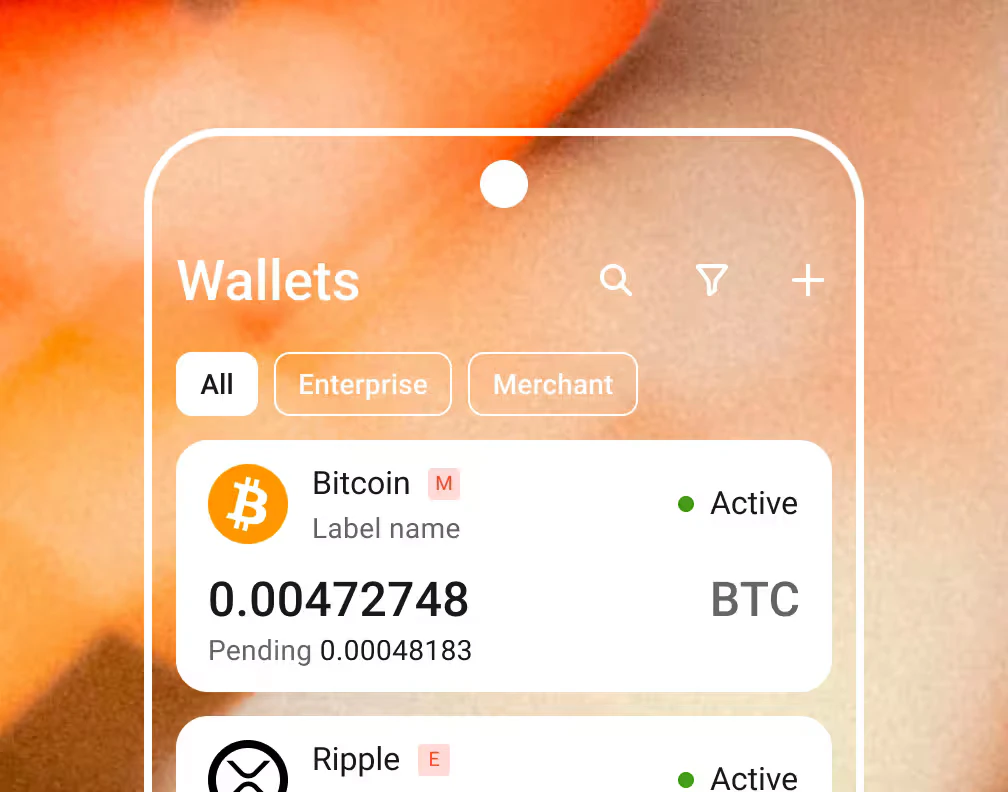







Mata Uang Kripto Gateway Pembayaran
Terima pembayaran dengan mudah dengan gateway pembayaran kripto kami. Nikmati biaya pemrosesan yang rendah, pembayaran crypto-to-fiat yang cepat, dan alur kerja pembayaran yang lancar
Buat AkunPesanan #248
616.900.00 USD
FAKTUR
 0xij9r5... y8lq3oleh
Fitur pemrosesan pembayaran Crypto
Dukungan multi-aset
Prosesor pembayaran kripto kami mendukung 350+ mata uang digital

Keamanan
Kami telah menerapkan protokol keamanan terbaik di kelasnya untuk menjamin pembayaran kripto tanpa batas yang aman
Skalabilitas
B2BINPAY dapat menangani meningkatnya permintaan tanpa kerumitan. Anda dapat terus menerima pembayaran dengan lancar bahkan ketika volume transaksi Anda meningkat
Antarmuka yang ramah pengguna
Kami menyediakan antarmuka pengguna yang intuitif untuk mengintegrasikan API pembayaran dan memantau semua transaksi Anda
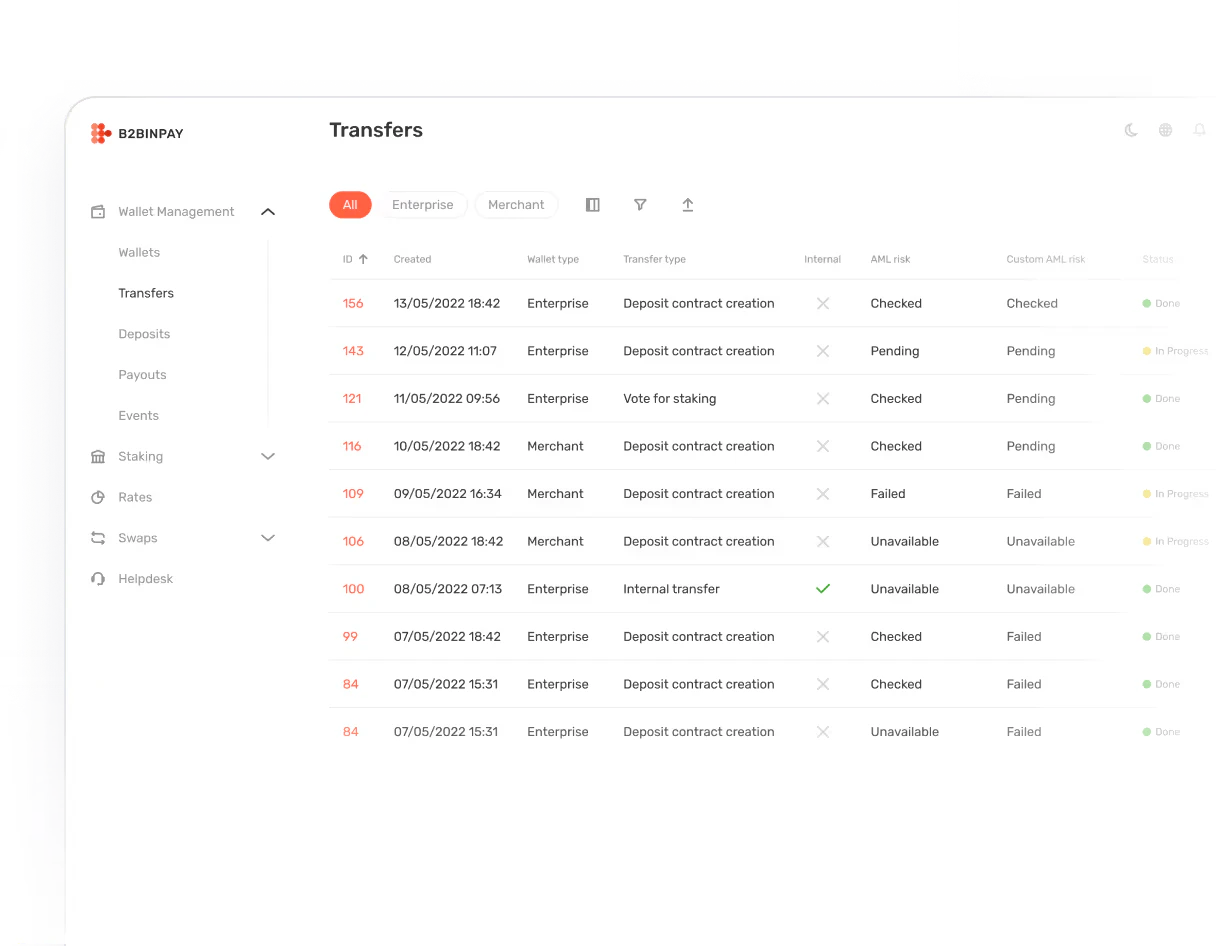

Kami telah membuat yang ramah pengguna ekosistem kripto lengkap untuk membantu Anda mengembangkan bisnis Anda

Arthur Azizov
CEO dan Pendiri
- $5,1 B
- Jumlah Total
- Diproses dalam transaksi masuk pada tahun 2025
- 6,7 M
- Transaksi
- Selesai menggunakan solusi kami pada tahun 2025
- 983
- Pelanggan Bisnis
- Menjadi klien kami pada tahun 2025
Solusi pembayaran Crypto
Pertukaran
Konversikan token dari dompet kripto Anda ke fiat atau mata uang kripto lainnya. Fitur dompet kripto kami memudahkan pengelolaan token Anda

Kirim
Kirim token secara instan ke dompet lain. B2BINPAY menawarkan solusi pembayaran global yang cepat

Tukar
Konversikan saldo Bitcoin Anda ke token lain atau stablecoin ke fiat dengan nilai tukar tetap

Toko
Simpan aset cryptocurrency dengan aman di dompet B2BINPAY Anda

Menerima
Terima pembayaran dalam lusinan token melalui gateway kripto kami

Mitra Kami
-
penyedia likuiditas
-

platform verifikasi
-
alat analitik

Manfaat penyedia pembayaran kripto B2BINPAY
Global

Kirim, simpan, dan terima pembayaran kripto tanpa batas tanpa kerumitan
Tidak Ada Tagihan Balik

Transaksi blockchain tidak dapat diubah, menghilangkan risiko tagihan balik yang tidak perlu atau penipuan
Independen

Tidak ada ketergantungan pada bank pihak ketiga untuk memfasilitasi transaksi. Gateway pembayaran mata uang digital kami memfasilitasi transaksi secara mandiri
Aman

Enkripsi canggih, transparansi blockchain, dan perlindungan dari serangan DDoS berbahaya. Terima pembayaran dalam crypto tanpa khawatir tentang keamanan
Tak Terbatas

Kami tidak membatasi transaksi mata uang kripto Anda
Cepat Pencahayaan

Transaksi diselesaikan secara instan di akun pedagang dan dompet kripto Anda
Integrasi Mudah

Proses integrasi API blockchain yang ramah pengguna. Dokumentasi API terperinci kami membuat integrasi gateway pembayaran kripto mulus
Tidak Ada Cadangan Bergulir

Tidak seperti prosesor fiat konvensional, Anda tidak diharuskan untuk membekukan persentase token Anda sebagai cadangan bergulir
KYT

Kepatuhan adalah yang terpenting sebagai penyedia pembayaran kripto. Oleh karena itu, kami telah mengintegrasikan layanan kepatuhan kenali pelanggan yang canggih untuk mencegah transaksi ilegal
Ajukan pertanyaan kepada pakar kami
Pakar kami selalu tersedia untuk menerima pertanyaan Anda tentang pembayaran kripto tanpa batas.
HubungiDioptimalkan untuk Bisnis Anda
Mengidentifikasi Pembayar
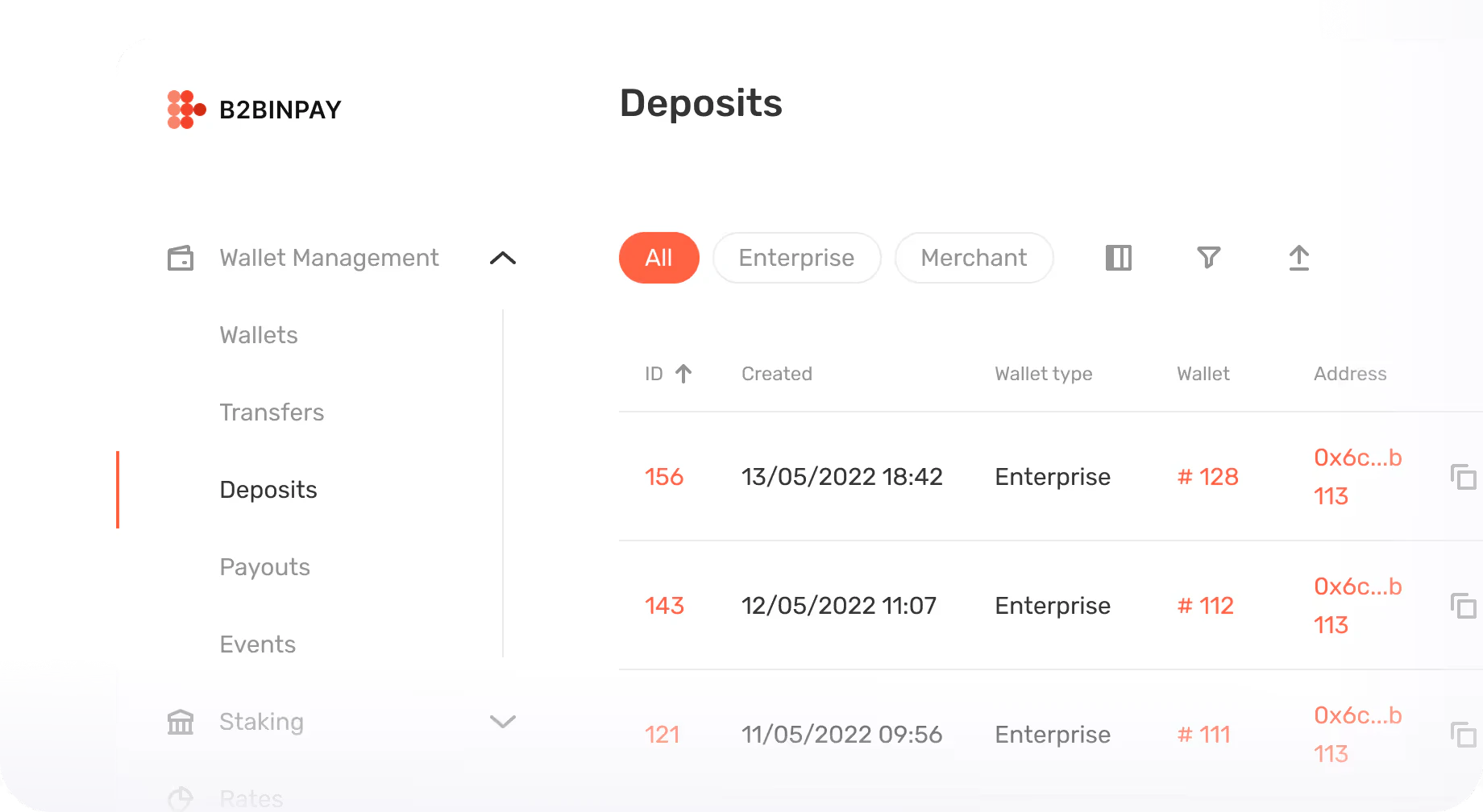
Melacak pembayaran dan mengidentifikasi pembayar membutuhkan waktu dan usaha
Solution: Secara otomatis menghasilkan alamat setoran unik untuk setiap pelanggan. Sederhanakan pelacakan dan pastikan identifikasi pembayar yang akurat.
Dana Konsolidasi
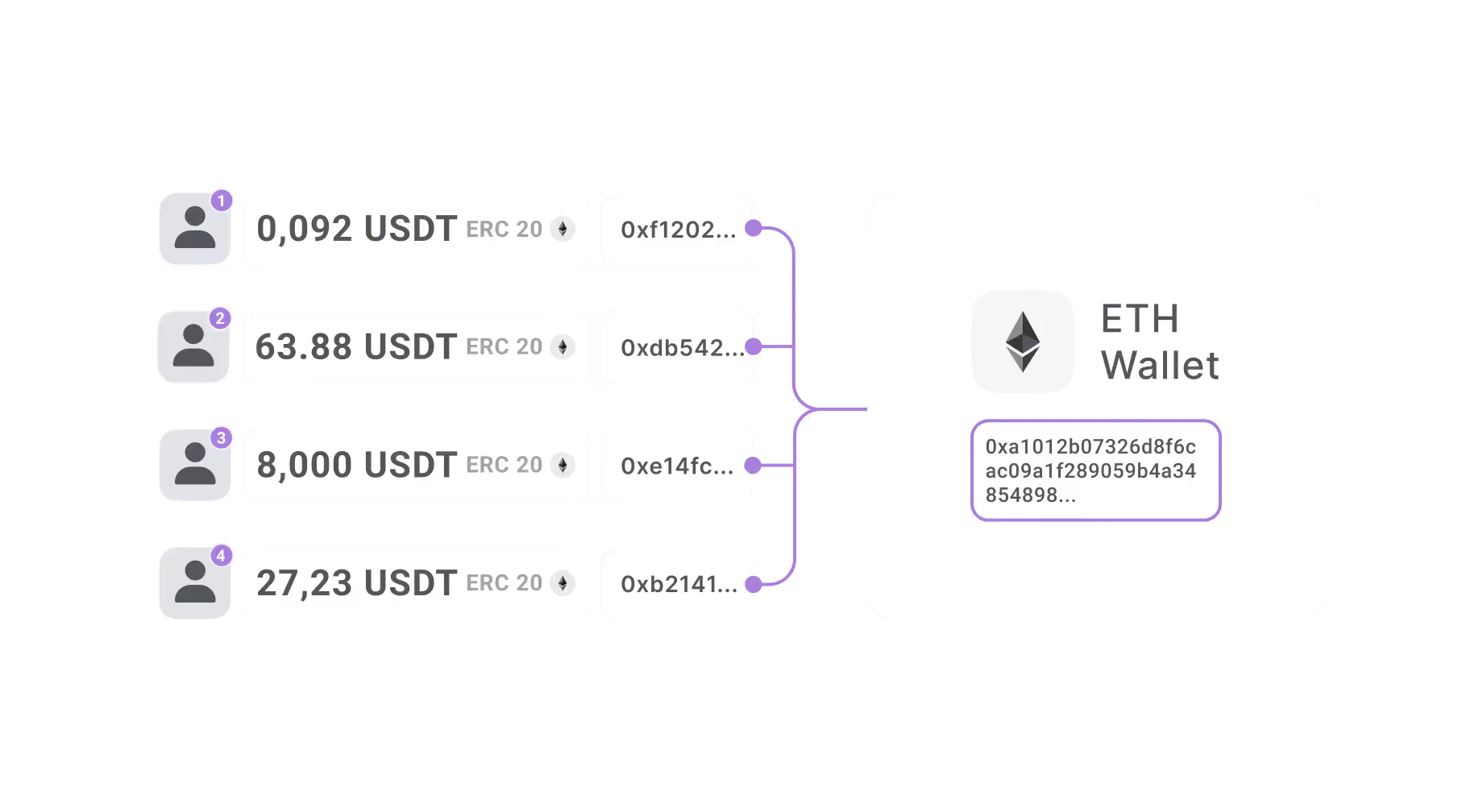
Dana yang tersebar di beberapa alamat mempersulit penarikan dan manajemen sumber daya
Solution: Semua dana secara otomatis dikonsolidasikan ke dalam satu dompet kripto untuk penarikan manual atau otomatis yang efisien, kontrol yang lebih baik, dan penghematan waktu
Keamanan Berlapis-lapis
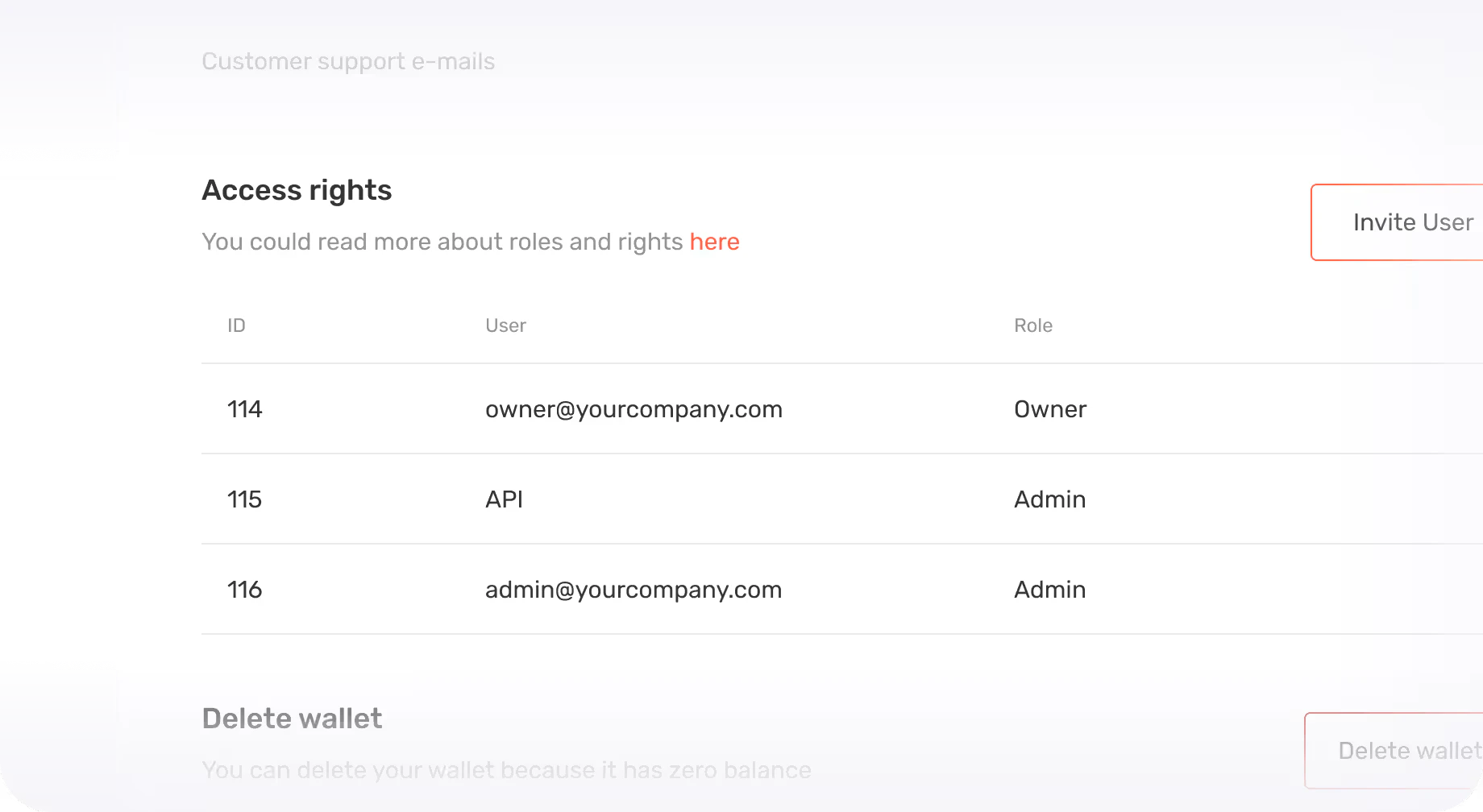
Pelanggaran data dan kesalahan manual mengancam bisnis Anda
Solution: 2FA, Daftar Putih Alamat, Hak Pengguna, Ambang Dompet, sistem penilaian risiko Blockchain, dan audit keamanan pihak ketiga yang sering menjaga data dan dana Anda tetap aman saat menggunakan solusi pemrosesan kripto B2BINPAY
Pencegahan Penipuan
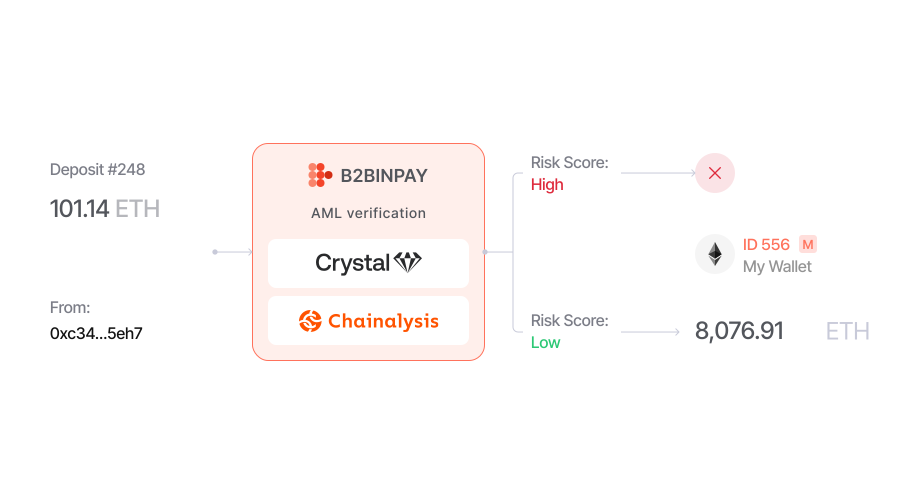
Penipuan dan aktivitas mencurigakan mengancam keuangan Anda
Solution: Sistem Know-your-transaksi (KYT) memeriksa setiap transaksi. Terima transaksi kripto di situs web atau aplikasi Anda tanpa khawatir tentang keamanan
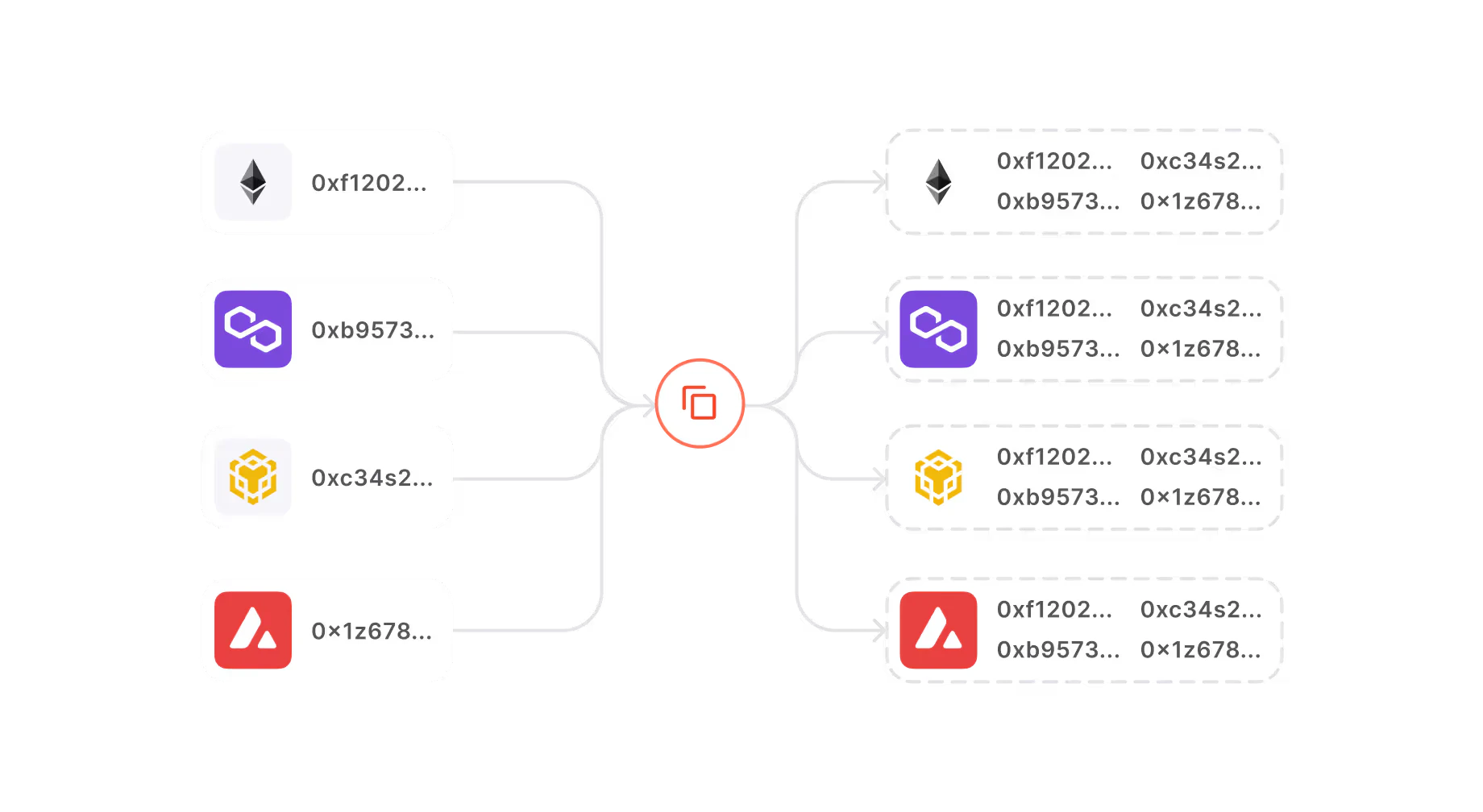
Alamat Dompet yang Anti Boleh
Kesalahan manusia dalam pembuatan faktur manual mengganggu operasi
Solution: Duplikat dompet & alamat untuk mata uang yang sama di blockchain yang berbeda untuk mengurangi kebingungan
Solusi yang tepat untuk semua bisnis Anda
 E-commerce
  Broker Forex dan CFD
  Bursa kripto
  Perjudian
  Merchant
  Dealer mobil
  Layanan penukaran
  Broker kripto
  Game
Game  Dana lindung nilai dan investasi
  Jasa hukum dan konsultasi
  Broker multi-aset
  Bursa perdagangan margin
  Properti
  Industri perjalanan
  Aplikasi dompet seluler
  Restoran
 Pemrosesan Pembayaran Crypto
Menerima pembayaran kripto dengan mudah dan mengubahnya menjadi fiat, stablecoin, dan koin utama lainnya
Dompet sebagai Layanan
Platform yang kuat untuk menerima, menyimpan, dan mengirim token digital
API Pembayaran
Gunakan API blockchain kami untuk menghubungkan platform Anda dalam hitungan menit. Dokumentasi terperinci kami membantu Anda mengintegrasikan API tanpa kerepotan dan mulai menerima token melalui platform pembayaran kripto kami. Pelajari Lebih Lanjut
Bagaimana cara memulainya
-
Mendaftar untuk B2BINPAY
-
Menerima kunci API unik Anda
-
Bagikan kunci API dengan pengembang Anda untuk mengintegrasikan B2BINPAY ke toko Anda
-
Uji sistem pembayaran terdesentralisasi tanpa menimbulkan biaya di lingkungan kotak pasir kami
-
Langsung dan mulai menerima pembayaran kripto lintas batas tanpa kerumitan
- Buat akun




Transaksi Off-Chain
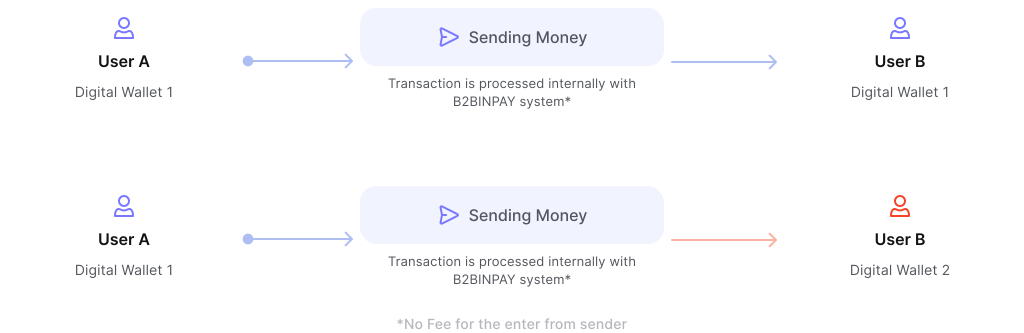
B2BINPAY memiliki sistem transaksi eksklusif yang memungkinkan dana ditransfer di luar blockchain. Pendekatan ini mempercepat transaksi dan mengurangi biaya pemrosesan
Ketahui Biaya Anda
Transaksi untuk
Pemrosesan Pembayaran Crypto
Masuk
- $5 — ∞ juta
- 0,25%
- $3 — 5 juta
- 0.30%
- $1 — 3 juta
- 0.35%
- $0 — 1 juta
- 0,40%
Keluar
- Tanpa Biaya
- 0,00%
Transaksi untuk
Wallet sebagai Layanan (WaaS)
Masuk
- Tanpa Biaya
- 0,00%
Keluar
- $20 — ∞ juta
- 0,025%
- $10 — 20 juta
- 0,030%
- $5 — 10 juta
- 0.035%
- $3 — 5 juta
- 0,040%
- $1 — 3 juta
- 0.045%
- $0 — 1 juta
- 0,050%
Blockchain & Mata Uang yang Didukung
Kami memberdayakan bisnis Anda untuk menerima USDT secara mulus di 9 blockchain utama, dengan banyak opsi tambahan untuk mendukung kebutuhan unik Anda.


Diatur Penyedia Layanan Aset Virtual


Pers tentang kami
 Rapid Change, Real Impact: Vit Shtyrkin on AI & Crypto Tools
  Solana ETFs See Record Outflow as 21Shares' TSOL Bleeds $42M









Pembaruan & Wawasan Produk
 B2BINPAY 26.3.1: Sender Addresses on Incoming Transfers, Support Inside the Account, Staff 2FA B2BINPAY 26.3.1 puts the sender address of every incoming payment in the transfer object and the callback, adds a support messenger inside the account, and brings 2FA to staff users.
  B2BINPAY 26.2.16: Improved Security, Layered Approvals, Failed Collections Retry, and a Quiet Captcha
  B2BINPAY 26.2.14: Faster Rates API, Steadier Deposits, One-Form Sign-Up
  B2BINPAY 26.2.10: Toncoin to Gram, Fee Control on AML Refunds, Commissions Ladder in the Client UI
 Oleh Pengembang untuk Pengembang
Pengujian adalah bagian utama dari proses integrasi B2BINPAY yang membantu menghilangkan potensi masalah sebelum ditayangkan. Hubungi kami untuk mempelajari lebih lanjut

Fungsionalitas
- Kripto Testnet
- Batas Mata Uang hingga 6
- Tentukan Kisaran Deposit
- Tetapkan Kecepatan Transaksi

Integrasi
- dengan B2INTI
- dengan BridgerPay
- dengan Kantor Belakang FX
- dengan Praksis Kasir

Operasi Keuangan
- Kirim Mata Uang Digital
- Buat Pembayaran
- Konversikan Cryptocurrency
- Simpan Crypto
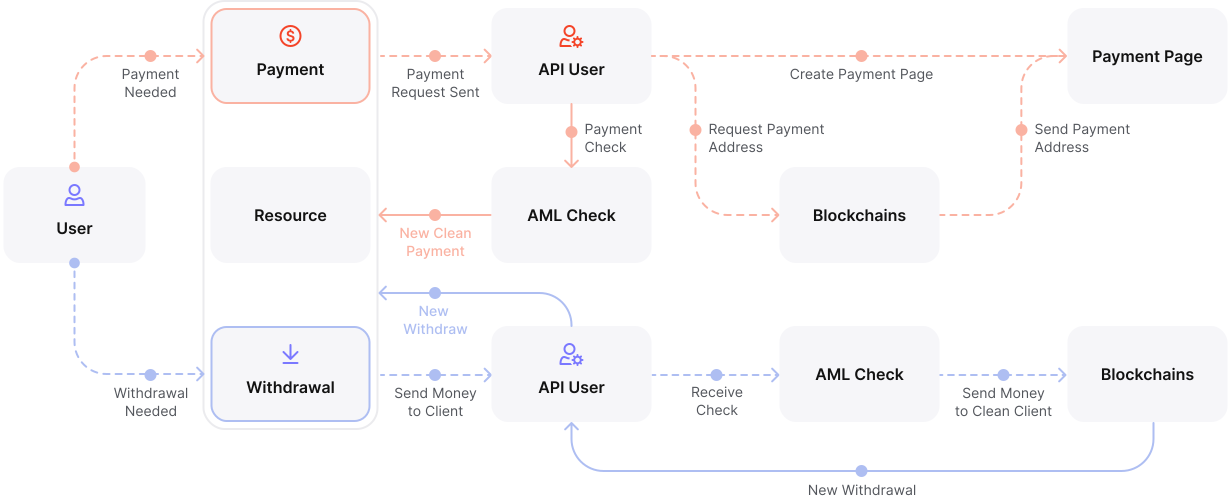
Integrasi cepat dengan mudah melalui Rest API. Teknologi canggih kami memungkinkan Anda untuk mengintegrasikan faktur dan menangani akuisisi dan transfer dengan cara yang tepat yang Anda butuhkan
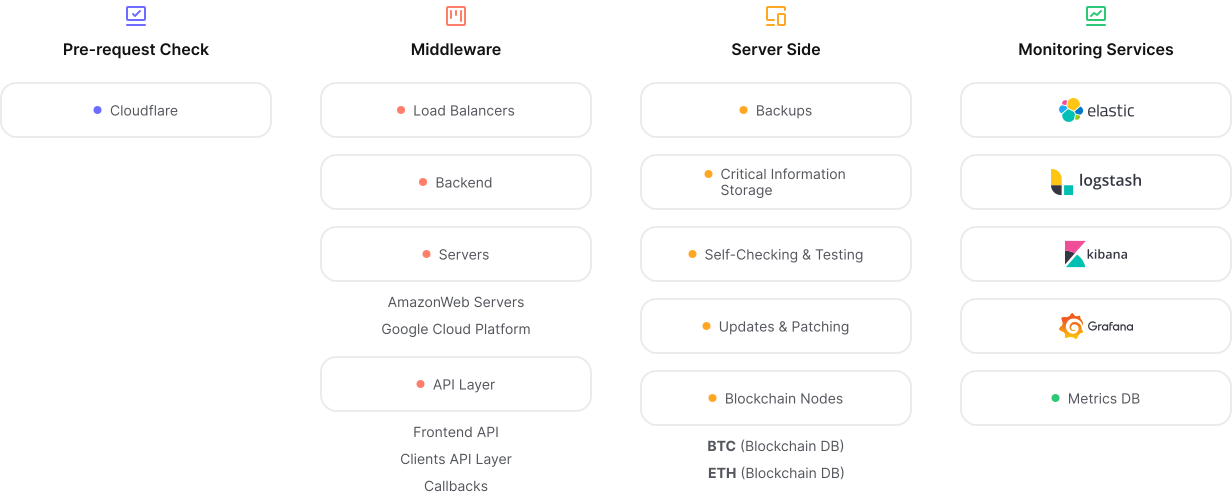
Infrastruktur kami beroperasi di beberapa server di beberapa pusat data memastikan pengiriman data super cepat dan latensi serendah mungkin. Kami memiliki hosting redundan dan lingkungan yang seimbang beban untuk memastikan keandalan maksimum




















Siap untuk meningkatkan permainan kripto Anda?
Bergabunglah dengan bisnis yang sudah berhasil memulai dengan B2BINPAY
Pertanyaan Umum
Pemrosesan pembayaran cryptocurrency biasanya memakan waktu beberapa menit. Dalam beberapa kasus, transaksi kripto diselesaikan secara instan.
Kami terus menerapkan pembaruan produk untuk memberikan fitur baru kepada pelanggan dan menjaga platform kami tetap aman.
Anda dapat melacak transaksi dan pembayaran real-time dari dasbor akun B2BINPAY Anda. Pemantauan yang mudah adalah salah satu dari banyak manfaat memilih sistem pembayaran kripto kami.
Kami menyediakan dokumentasi API terperinci untuk integrasi gateway pembayaran kripto. Tim dukungan kami juga dapat memandu Anda melalui langkah-langkah mengintegrasikan solusi pembayaran kripto kami.
Gerbang kripto kami mendukung sebagian besar negara. Kami tidak menyediakan layanan kepada penduduk atau perusahaan yang berbasis di Afghanistan, Kanada, Republik Afrika Tengah, Kuba, Eritrea, Iran, Republik Rakyat Demokratik Korea (DPRK), Libya, Myanmar, Rusia, Somalia, Sudan Selatan, Sudan, Suriah, Amerika Serikat, Venezuela, Yaman, atau wilayah Krimea, Donetsk, Luhansk, Kherson, dan Zaporizhzhia di Ukraina.
B2BINPAY menyediakan solusi kuat yang dapat menangani peningkatan volume transaksi tanpa kerumitan. Anda dapat meningkatkan skala bisnis Anda dengan B2BINPAY tanpa khawatir akan perlambatan kecepatan dan keandalan transaksi.
Ya, Anda dapat menerima pembayaran kripto mikro dengan B2BINPAY. Tidak seperti platform pemrosesan pembayaran tradisional, biaya pemrosesan kami yang rendah memungkinkan klien untuk mengambil pembayaran mikro.
Transaksi blockchain biasanya tidak dapat diubah, membuat pengembalian pembayaran kripto menjadi rumit untuk bisnis. Namun, Anda dapat dengan sengaja mengirim ulang token ke dompet penerima sebagai bagian dari pengembalian dana.
Kami tidak memiliki jadwal khusus untuk memperbarui API kami. Sebagai gantinya, kami memberikan pembaruan saat diperlukan untuk menambahkan fitur baru, meningkatkan yang sudah ada, atau memperbaiki kekurangan apa pun dalam alur kerja integrasi pembayaran kripto kami.
Anda dapat menyesuaikan B2BINPAY dengan menulis kode khusus untuk API kami. Misalnya, Anda dapat menetapkan setoran minimum untuk pengguna platform Anda melalui API.
B2BINPAY menyediakan dompet multi-mata uang yang memungkinkan Anda mengelola beberapa token dari satu tempat. Anda dapat mendaftar hari ini dan mendapatkan dompet ini untuk menerima pembayaran dalam crypto.